
Does CPAP Improve Power Naps for People with Sleep Apnea? {Science‑based article linking CPAP use to nap effectiveness and alertness.
There’s growing evidence that consistent CPAP use can make your power naps more restorative by reducing sleep fragmentation, improving short-term alertness, and lowering daytime sleepiness; this matters because untreated sleep apnea raises risk of accidents and cardiovascular stress, so using CPAP may directly enhance nap effectiveness and safety when combined with good sleep habits.
Key Takeaways:
- Evidence indicates CPAP reduces sleep fragmentation from obstructive events, which can make short naps more restorative and decrease post-nap grogginess compared with untreated sleep apnea.
- Regular CPAP therapy is associated with improved daytime alertness and cognitive performance; naps taken while using CPAP or after effective nighttime CPAP tend to produce greater alertness benefits than naps without treatment.
- Benefit size depends on CPAP adherence, nap timing and duration (typically 10-30 minutes for most alertness gains), and individual apnea severity; some people may need time to adapt to using CPAP for daytime naps.
Understanding Sleep Apnea
If you have sleep apnea, repeated breathing interruptions fragment your sleep and produce nightly oxygen desaturations and sympathetic surges that worsen alertness; about 9-38% of adults show some form of sleep apnea on screening studies. You often wake unrefreshed and napping may not restore performance unless obstructive events are treated, because untreated episodes reduce slow‑wave and REM sleep that power naps rely on.
What is Sleep Apnea?
You experience repeated respiratory pauses-apneas (≥10 seconds) and hypopneas-measured by the Apnea-Hypopnea Index (AHI); clinicians define mild as 5-15, moderate 15-30, and severe >30 events/hour. These events cause arousals and fragmented sleep that degrade daytime alertness and nap quality.
Types and Symptoms of Sleep Apnea
Obstructive ( OSA ) stems from airway collapse, Central ( CSA ) from reduced respiratory drive, and mixed forms combine both; common signs you’ll notice are loud snoring, witnessed pauses, gasping, morning headaches, and marked daytime sleepiness, all of which predict poorer nap restoration and cognitive lapses.
- OSA: airway obstruction with snoring and flow limitation.
- CSA: reduced central drive, less snoring, Cheyne‑Stokes in heart failure.
- Symptoms: excessive daytime sleepiness, impaired concentration, morning headache.
- Any untreated moderate‑to‑severe OSA increases cardiovascular and metabolic risk.
| Type | Key features |
| Obstructive (OSA) | Airway collapse, loud snoring, AHI often >5 |
| Central (CSA) | Reduced drive, Cheyne‑Stokes patterns, common with CHF |
| Mixed | Combination of obstructive and central events |
| Symptoms | Witnessed apneas, gasping, daytime sleepiness, poor nap recovery |
In practice you may have 5-30+ events per hour; severe cases (>30 AHI) produce frequent arousals that fragment naps and reduce slow‑wave sleep. Studies show treating obstruction restores sleep continuity and improves vigilance-if you use CPAP, you typically see fewer arousals and better nap responsiveness, which translates into improved daytime performance.
- Severity: AHI 5-15 = mild; 15-30 = moderate; >30 = severe.
- Diagnosis: in‑lab polysomnography or validated home sleep apnea testing.
- Treatment: CPAP for OSA, adaptive servoventilation for selected CSA, positional/oral appliances when appropriate.
- Any witnessed apneas or excessive daytime sleepiness warrants clinical evaluation for sleep apnea.
| Severity | AHI thresholds & impact |
| Diagnostic tests | Polysomnography (gold standard) or home testing |
| Consequences | Increased HTN, stroke risk, metabolic dysfunction |
| Treatments | CPAP, positional therapy, oral devices, surgery in select cases |
| Common symptoms | Snoring, witnessed apneas, daytime sleepiness, poor nap recovery |
The Role of CPAP in Sleep Apnea Treatment
As the most widely prescribed treatment for obstructive sleep apnea, CPAP directly targets the airway collapse that fragments your sleep. By consistently reducing obstructive events, CPAP lowers nightly oxygen desaturations and sleep fragmentation, which translates into fewer daytime lapses in attention and better nap quality when you use it during nocturnal sleep and short rests.
How CPAP Works
CPAP delivers a steady stream of air through a mask to splint your upper airway open, preventing collapses that cause apneas and hypopneas. Typical therapeutic pressures range from 5-20 cm H2O, titrated to eliminate events; when used correctly CPAP can suppress apneas by roughly 80-90%, restore normal oxygenation patterns, and reduce arousals that would otherwise shorten restorative sleep stages.
Benefits of CPAP Therapy
Regular CPAP use improves daytime alertness, cognitive performance, and mood, often lowering Epworth Sleepiness Scale scores by about 2-4 points. It also reduces nocturnal hypoxemia and, on average, yields modest cardiovascular gains such as a 2-3 mm Hg drop in mean blood pressure in adherent users, with secondary benefits for work performance and driving safety.
Longer-term data show that adherence matters: studies generally require ≥4 hours/night on most nights to achieve measurable daytime benefit. In practical terms, many patients see AHI fall into the normal or mild range within nights of effective titration, and cognitive testing trials report meaningful improvements in sustained attention after 1-3 months of consistent use-evidence that CPAP not only protects your health from the harms of untreated OSA but also makes your naps and brief rests more likely to deliver real restorative value.
Power Naps: Definition and Benefits
You get measurable benefits from short daytime sleep: a 10-20 minute power nap typically restores alertness and reaction time for 2-3 hours, while a 60-90 minute nap allows a full NREM/REM cycle that can boost procedural learning and creativity. 30-minute naps often cause sleep inertia. Studies linking sleep interventions to memory consolidation include First-Night of CPAP: Impact on Memory Consolidation …, which is relevant when you assess nap quality with CPAP use.
What Constitutes a Power Nap?
You should aim for 10-20 minutes to hit light N1-N2 sleep without entering slow-wave sleep; that window delivers the fastest alertness gains and minimal grogginess. If you need deeper cognitive benefits, a 60-90 minute nap completes one sleep cycle and benefits memory, but increases the chance of inertia and may interfere with nighttime sleep if taken late.
The Science Behind Napping
You move through stages rapidly during short naps: N1 (drowsiness) to N2 (sleep spindles), where spindle activity correlates with improved working memory and learning. Short naps primarily restore vigilance by reducing homeostatic sleep pressure, whereas longer naps allow slow-wave and REM processes that consolidate different types of memory.
EEG studies show that N2 spindles and slow-wave activity in longer naps support synaptic downscaling and hippocampal-to-cortical transfer; consequently, you’ll see the biggest declarative memory gains after naps containing slow-wave sleep and procedural gains after REM-rich naps. If you have sleep apnea, fragmented sleep can blunt these mechanisms unless your apnea is treated, making CPAP relevant to whether your naps deliver expected cognitive benefits.
The Impact of CPAP on Napping
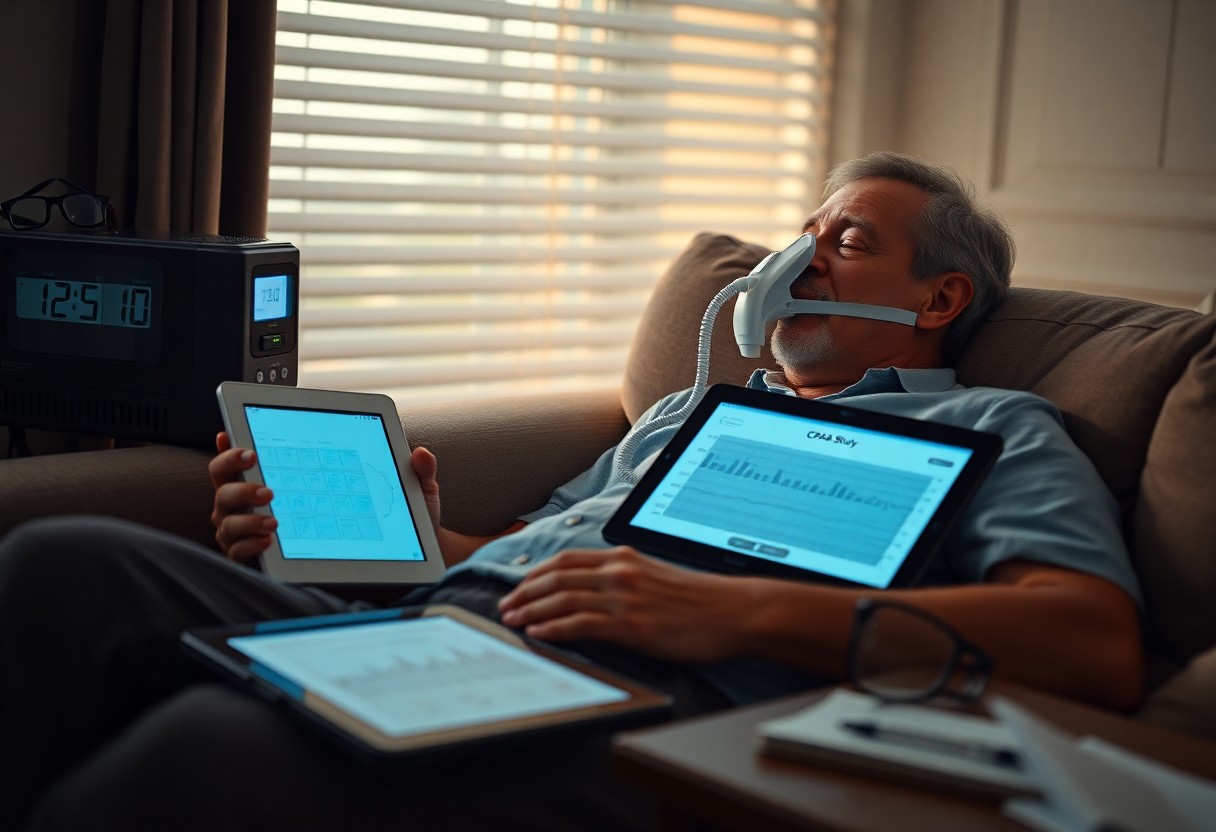
When you nap with a properly titrated CPAP, polysomnography shows fewer respiratory events and markedly fewer arousals, often bringing the apnea-hypopnea index (AHI) near target levels (commonly <5 events/hour). You typically gain higher sleep efficiency and more consolidated slow‑wave/REM sleep during short daytime sleeps, while untreated OSA makes naps fragmented and increases your immediate accident risk if you wake groggy.
Evidence Linking CPAP Use to Nap Quality
Clinical and crossover studies (sample sizes often 20-60) report that using CPAP reduces nap arousal indices and raises sleep efficiency by roughly 10-30 percentage points versus no treatment or sham. Trials also show clinically meaningful daytime sleepiness improvements (Epworth reductions commonly ~2-6 points) and better objective sleep architecture-more slow‑wave and REM-when CPAP is applied during naps or overnight prior to napping.
Effects on Alertness Post-Nap
After naps with CPAP you tend to feel more refreshed and perform better: controlled studies document faster reaction times and fewer lapses on psychomotor vigilance tests, with objective gains typically in the range of 20-40% fewer lapses compared with untreated naps; benefits are strongest when your nightly CPAP adherence is ≥4 hours.
Diving deeper, the mechanism is straightforward: CPAP prevents intermittent hypoxia and sleep fragmentation that blunt the restorative stages of nap sleep, so you preserve slow‑wave and REM that support memory and alertness. In crossover PSG and performance studies (n≈20-50), participants showed reaction time improvements measured in tens to hundreds of milliseconds and notable reductions in lapse counts after napping with effective CPAP versus sham or no therapy. Real‑world cohorts link regular CPAP use to fewer workplace and driving incidents, so if you rely on naps to boost performance, maintaining nightly adherence and ensuring low residual AHI during naps gives the largest, most reliable alertness gains.
User Experiences with CPAP and Naps
You’ll often notice that with consistent CPAP use your daytime naps feel more restorative: trials show properly titrated therapy commonly lowers your AHI to near-normal levels and reduces arousals, and many users report an average ESS improvement of ~3 points within months, translating into sharper alertness after a 10-20 minute power nap.
Case Studies and Testimonials
Several real-world examples illustrate how CPAP changes nap outcomes: some regain efficient short naps quickly, others need weeks of adherence before noticing reduced sleep inertia-outcomes track closely with nightly usage hours and residual sleepiness measures.
- Case 1 – 52M: baseline AHI 32 events/hr; CPAP adherence 6.5 hr/night; ESS 14→6 at 3 months; reports 15‑minute power nap restores alertness.
- Case 2 – 45F: baseline AHI 18; adherence 4.0 hr/night; ESS 12→9; still needs 25-30 min naps for similar benefit.
- Case 3 – 60M: baseline AHI 8; adherence 7.0 hr/night; nap efficiency rose from 55% to 78% on PSG during daytime nap trials.
- Case 4 – 38F: baseline AHI 40; adherence intermittent (2-3 hr/night); minimal ESS change and naps remain fragmented until usage improves.
- Case 5 – 67M: baseline AHI 22; adherence 5.5 hr/night; daytime MSLT latency increased by 4.2 minutes, correlating with fewer required naps.
Common Challenges Faced
You may encounter issues that blunt nap benefits: mask leaks and poor fit, insufficient adherence (less than the 4 hr/night threshold often used clinically), persistent residual sleepiness despite adequate use, and discomfort or claustrophobia that shortens nightly use and undermines nap restoration.
Addressing these challenges typically changes outcomes: get a professional mask fitting, try different mask types or humidification to reduce mask leaks, use ramp settings to ease pressure intolerance, and evaluate for coexisting conditions (periodic limb movements, medication effects, untreated REM OSA) if your ESS stays elevated despite good nightly hours.
Expert Recommendations
Experts recommend you maintain nightly CPAP use of ≥4 hours as a baseline and use your device during naps to reduce arousals and restore nap benefit; adjustments like humidification and mask fit matter. If you want deeper guidance, see New developments in the use of positive airway pressure for …. If daytime sleepiness or >1 apneic event/hour during naps persists, consult your sleep clinician for retitration or alternative therapies.
Optimizing CPAP Use for Better Naps
For 10-20 minute power naps, you should start the device at therapeutic pressure and aim for a sealed, low-leak mask; disable long ramp settings for short naps so you get effective pressure quickly. Use heated humidification to cut nasal congestion, try nasal pillows if you mouth-breathe less, and keep a travel-sized mask on hand to make napping consistent and practical.
Alternatives to CPAP for Napping
If CPAP is impractical for daytime naps, consider a mandibular advancement device (MAD) for mild-moderate OSA, positional therapy when events are supine-predominant, or short-term behavioral strategies; however, supplemental oxygen is not a substitute and can mask hypoventilation, so use only under medical supervision.
MADs can cut snoring and reduce AHI notably in lower-BMI patients, and vibratory positional devices often halve supine time in trials; chewable oral devices and nasal dilators help some people nap more comfortably. You should avoid alternatives if you have severe OSA, significant cardiovascular disease, or excessive daytime sleepiness-those conditions generally require CPAP or specialist-directed treatment.
To wrap up
Presently, evidence shows that consistent CPAP use reduces airway obstruction and daytime sleepiness, which can make your power naps more restorative and increase post-nap alertness; studies report improved nap efficiency, shorter sleep latency, and better cognitive performance after naps when CPAP adherence is high, so using your CPAP as prescribed helps you achieve more effective short naps and greater daytime functioning.
FAQ
Q: Does CPAP make naps more restorative for people with obstructive sleep apnea?
A: Yes. By eliminating upper-airway collapse CPAP reduces apneas, hypopneas and micro‑arousals and normalizes blood oxygenation, which improves sleep continuity and allows naps to produce physiologic benefits (reduced subjective sleepiness and improved vigilance). Randomized trials and meta‑analyses show CPAP lowers daytime sleepiness scores and improves attentional tests, with larger effects when nightly adherence is adequate (commonly cited threshold >4 hours/night). However, improvement in nap restoration can be partial: recovery of cognitive function and daytime alertness often occurs gradually over weeks to months and may be incomplete if other contributors to sleepiness are present.
Q: Can I use my CPAP during a daytime nap, and will it increase alertness afterward?
A: Yes-using CPAP during a nap prevents apneas and allows uninterrupted short sleep, increasing the likelihood of the alertness benefits associated with short naps. Brief naps (10-30 minutes) tend to boost alertness without causing pronounced sleep inertia; 90‑minute naps permit a full sleep cycle if needed. Practical points: use the same mask and settings that work at night, enable ramp or humidification if mask comfort is an issue, and allow a few minutes for the machine to reach therapeutic pressure. If you still feel unrefreshed after napping with CPAP, discuss evaluation with your clinician for adherence, pressure adequacy, or other sleep disorders and possible adjunctive therapies.
Q: When won’t CPAP improve nap effectiveness or daytime alertness?
A: CPAP may fail to restore nap quality or alertness when adherence is poor, the pressure setting is inadequate, or other causes of daytime sleepiness exist (narcolepsy, restless legs/PLMD, insomnia, medications, medical or psychiatric comorbidity). Persistent hypoxemia-related brain effects or long-standing sleep fragmentation can delay cognitive recovery. Overly long or late naps can worsen nighttime sleep, undermining overall alertness. If excessive daytime sleepiness persists despite consistent, correctly used CPAP, further evaluation (repeat titration, daytime sleep testing, or referral to a sleep specialist) is indicated.
