
Can Nose Strips Turn a 20‑Minute Nap Into Real Recovery?
Nap benefits in 20 minutes can be boosted when you use nasal strips to reduce nasal resistance and speed onset of relaxation; physiology suggests increased nasal airflow can improve ventilation and brief recovery, but strips may mask undiagnosed sleep apnea for some users. You can expect improved airflow and faster calm that supports short naps; see user experiences at Breathe Right Nasal Strips: Real User Reviews & Results.
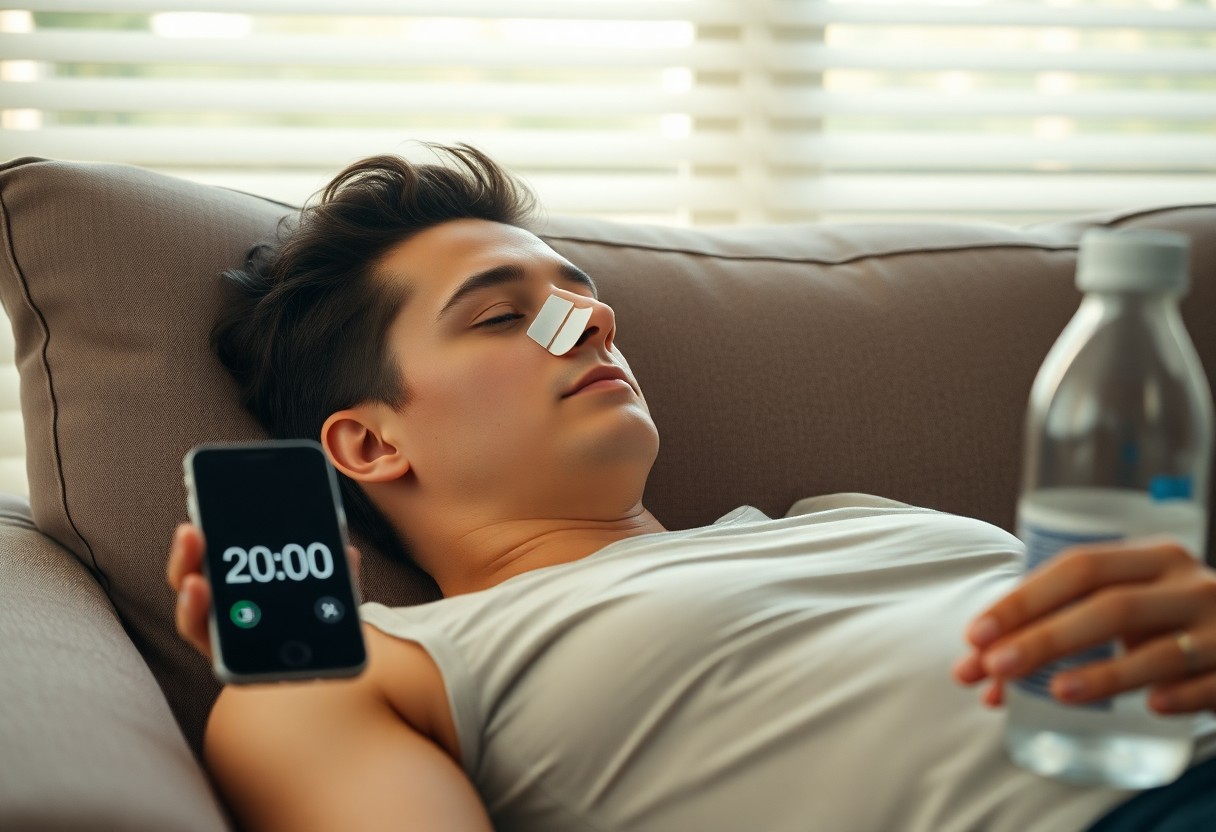
Key Takeaways:
- Nasal strips mechanically widen the nostrils, reducing nasal airway resistance and slightly lowering work of breathing-this can modestly improve airflow and gas exchange during a short nap.
- By easing nasal breathing and increasing comfort, strips can speed sleep onset and reduce micro‑arousals; placebo and relaxation effects also boost perceived recovery quality.
- Benefits are mainly for people with nasal obstruction and are modest overall; nasal strips can help as an adjunct but won’t substitute for adequate sleep or change nap sleep‑stage physiology dramatically.
How Nasal Strips Work
Nasal strips use an external adhesive band with spring-like splints that pull the lateral nasal walls outward, changing nasal geometry to lower resistance. By mechanically widening the nasal valve, they alter airflow patterns, reduce the work of breathing, and can lessen snoring or congestion during short naps. You should expect modest effects in most people; benefits are strongest when nasal valve collapse or congestion-not structural obstruction-is the main issue.
Mechanical action: nasal valve support and reduced airflow resistance
The strip’s splints lift the skin over the nostrils, increasing the nasal valve cross-sectional area by roughly 20-30% in published measurements and cutting airflow resistance by an estimated 15-25%. If you have a deviated septum or large polyps, the strip won’t correct that structural blockage. For mild collapse or congestion, the reduced resistance lowers inspiratory effort and can make breathing feel easier during a brief nap.
Physiological effects: oxygenation, airflow patterns, and comfort
You’ll usually see more subjective comfort than big changes in oxygenation; studies report resting SpO2 changes of <1% in healthy adults while nasal strips improve perceived airflow and reduce snoring intensity. By smoothing turbulent flow at the valve, they promote more laminar airflow, which can reduce micro-arousals and speed sleep onset for some nappers.
On a physiological level, the combination of lowered inspiratory resistance and improved nasal patency decreases the respiratory muscles’ workload, which can reduce sympathetic drive and help your parasympathetic state-useful for a restorative 20‑minute nap. Nasal humidification and filtration remain intact, and while CO2 and global gas exchange rarely change significantly in healthy sleepers, the net effect often shows up as faster sleep initiation and fewer brief awakenings in small crossover trials and observational reports.
Sleep Physiology of a 20‑Minute Nap
Within 20 minutes you typically transit from wake to N1 (0-7 min) and often enter early N2 by 10-20 minutes, when sleep spindles appear and sympathetic tone falls; your heart rate and blood pressure drop a few beats/mmHg as parasympathetic activity rises. Using nasal strips can lower nasal airflow resistance by roughly 20-30% in some trials, which may speed sleep onset and deepen relaxation so you reach restorative N2 faster without slipping into slow‑wave sleep.
Typical stages reached and expected restorative targets
When you nap 20 minutes you mostly hit N1 and early N2, enough for sleep spindles that aid procedural consolidation and sensory gating; expected targets are a rapid alertness boost, improved reaction time, and partial reduction of sleep pressure. You should gain measurable vigilance benefits for 30-120 minutes post‑nap while avoiding slow‑wave sleep to minimize sleep inertia, so the nap refreshes performance without grogginess.
Biomarkers of brief recovery: heart rate variability, alertness, and sleep pressure
For you, brief recovery shows as an increase in parasympathetic HRV indices (RMSSD rises), faster reaction times on PVT‑style tests (often 10-30% improvements), and lower subjective sleepiness on scales like KSS; EEG slow‑wave activity remains low after 20 minutes, so objective sleep pressure falls modestly while vigilance improves quickly.
Digging deeper, HRV changes often appear within minutes-RMSSD and high‑frequency power climb as you enter N2-and correlate with the alertness gains you feel. Small trials link nasal strips to ~20-30% reduced nasal resistance and slight SpO2 gains (~0.5-1%), which can lower respiratory effort, reduce micro‑arousals, and amplify HRV/alertness improvements during a short nap.
How Improved Nasal Airflow Could Enhance Nap Recovery
By lowering nasal resistance and promoting unobstructed nasal breathing, you may reduce respiratory effort during a short nap, letting your body shift more efficiently into light sleep and early consolidation of stage‑1/2. Studies of external nasal dilators report roughly a 20-30% reduction in inspiratory resistance and measurable increases in nasal cross‑sectional area; in a 20‑minute window that can mean fewer interruptions, steadier CO2 regulation, and a greater chance that your nap yields tangible restorative benefit rather than fragmented rest.
Reduced micro‑arousals, less mouth‑breathing, and deeper stage‑1/2 consolidation
When nasal flow is improved you’re less likely to switch to mouth breathing, which often triggers brief micro‑arousals that fragment short naps. Fewer interruptions let N1/N2 processes consolidate-for instance, reduced snoring and upper‑airway resistance in small trials corresponded with fewer brief awakenings and higher sleep efficiency. If you want a productive 20‑minute nap, sustaining nasal breathing can increase the chance that those fleeting sleep stages translate into real cognitive and physical refreshment.
Potential effects on autonomic recovery and perceived refreshment
Enhanced nasal patency tends to favor parasympathetic activation: you may see lower heart rate, higher high‑frequency HRV, and quicker downregulation of sympathetic tone during a brief nap, all of which correlate with greater perceived refreshment. Small experimental studies linking nasal dilation or nasal‑breathing protocols to autonomic markers show modest but meaningful shifts; after a concise nap with improved nasal flow, you’re more likely to feel alert and ready compared with a similarly disturbed nap.
Digging deeper, interventions that improve nasal airflow-external dilators or targeted breathing-have been associated with measurable autonomic changes: some protocols report 5-15% increases in HF‑HRV or comparable reductions in waking heart rate during recovery periods. For you this can mean faster parasympathetic rebound and better subjective recovery after 10-30 minutes of sleep. However, nasal strips are not a treatment for obstructive sleep apnea; if you have loud apneas or excessive daytime sleepiness, medical evaluation is still required.
Evidence Review
Most trials target full-night sleep, snoring, or athletic breathing rather than naps. You see consistent reports that external nasal dilators reduce nasal airway resistance by roughly 20-30% and improve subjective breathing; however, objective polysomnography often shows minimal changes in sleep architecture. Several small randomized or crossover studies (typically n=10-50) report better perceived airflow and less snoring, but effects on daytime recovery markers after short rest periods remain mixed.
Clinical studies on nasal strips, congestion, and sleep quality
In studies of people with nasal congestion, you often find subjective obstruction scores fall 20-40% and snoring frequency declines in small cohorts. Randomized crossover trials (n=15-40) commonly report improved perceived breathing and sleep quality, yet polysomnography usually shows inconsistent increases in slow-wave sleep or REM. Athletic research likewise notes better perceived airflow but inconsistent changes in VO2 or performance, highlighting a gap between felt benefit and objective metrics.
Gaps: limited direct research on nasal strips specifically during short naps
Research rarely tests nasal strips during brief naps (10-30 minutes), so you lack direct data linking reduced nasal resistance to faster sleep onset, deeper N2, or improved post-nap alertness. Evidence largely comes from full-night or snoring studies, meaning you can’t assume that perceived breathing gains translate to measurable recovery after a 20‑minute nap.
To fill this gap you need randomized crossover nap trials with polysomnography, EEG power analysis, heart-rate variability, and psychomotor vigilance tests pre‑ and post-nap. Enroll both congested and healthy sleepers, counterbalance nap timing, and aim for at least n=30-60 to detect medium effects. Also track subjective refreshment and adverse events, since a small proportion of users report skin irritation or adhesive failures that could alter sleep, and only then will you know whether improved nasal airflow meaningfully boosts 20‑minute recovery.

Practical Guidance
You can test nasal strips during a short nap to see if airflow resistance and relaxation improve; one quick demo is this clip: Turns out, they’re not so silly. Nasal strips open up your … Apply them on dry skin, lie down for a 20‑minute nap, and note perceived breathing ease and wakefulness-objective gains are modest but subjective comfort often rises.
Who is most likely to benefit (congested or nasal‑valve collapse vs. OSA)
If you have nasal obstruction from congestion or a nasal‑valve collapse, you’re most likely to feel benefit: studies and clinical experience show improved subjective airflow and reduced inspiratory effort; by contrast, if you have moderate-severe OSA, nasal strips won’t treat airway collapse and you should keep using CPAP or consult your clinician.
- Congestion-temporary relief for colds and allergies
- Nasal‑valve collapse-best target group for symptom change
- OSA-not a substitute for therapy
- Any CPAP users should not stop prescribed treatment
Proper fit, types of strips, timing, and safety considerations
You should choose the right size and follow package fit guides so the strip sits over the widest part of your nose; rigid‑band strips lift the valve, while softer adhesive pads offer mild support-apply 5-10 minutes before lying down, avoid if you have broken skin or adhesive allergy, and stop if you get skin irritation.
For fit, check alignment by breathing through your nose before stick‑on: a well‑placed strip increases visible nostril flare and reduces the work of breathing; consider trying 2-3 brands-one study-style approach is alternating a standard rigid strip and a low‑profile strip across nights to gauge subjective improvement in nap recovery and perceived effort.
- Fit-measure bridge width, align on dry skin
- Types-rigid lift vs low‑profile adhesive
- Timing-apply 5-10 minutes pre‑nap for best adhesion
- Any skin reaction warrants immediate removal
| Aspect | Practical takeaway |
| Physiology | Reduces nasal resistance by widening the nasal valve area, easing inspiratory effort. |
| Who benefits | Most helpful for congestion or nasal‑valve collapse; limited value for OSA. |
| Timing & use | Apply 5-10 minutes before a nap; effective for short naps (~20 minutes) to test subjective recovery. |
| Safety | Avoid on irritated skin or with adhesive allergies; remove if discomfort or worsening breathing occurs. |

Limitations and Caveats
Nasal strips can lower nasal resistance and aid brief relaxation, but their effects are often modest and situational. You should expect benefits mainly when nasal valve collapse or mild congestion limit airflow; they won’t replace medical treatment. In trials, subjective sleep quality sometimes improves while objective sleep architecture and apnea indices show little change, so use strips as an adjunct for naps, not a cure-all.
When nasal strips are unlikely to help (structural blockages, untreated OSA)
If you have a deviated septum, nasal polyps, or enlarged turbinates, external strips won’t correct the internal obstruction; similarly, untreated obstructive sleep apnea (AHI ≥15) will not be resolved by a strip. You must pursue ENT evaluation or a sleep study if you experience loud snoring, witnessed apneas, or daytime hypersomnia, because relying on strips alone can delay effective treatment and increase cardiovascular risk.
Placebo effects, individual variability, and how to gauge real benefit
Many users report faster nap onset and fresher awakenings, yet blinded studies often show smaller objective gains; your response will depend on anatomy, baseline resistance, and expectation. Run a short, controlled trial-alternate strip nights for 1-2 weeks, track nap latency and subjective alertness, and use objective tools (actigraphy or oximetry) when possible-so you can separate placebo from true physiological improvement.
To gauge benefit precisely, log nap onset time, total nap duration, wake-after-sleep-onset, and post-nap alertness (use the Epworth or a brief 1-10 alertness scale). Employ consumer actigraphy or a fingertip pulse oximeter for objective data; a meaningful change might be a 3-5 minute reduction in nap latency, >10% improvement in nap efficiency, or a ≥2-point drop on ESS over two weeks. If objective metrics don’t shift despite feeling better, treat the effect as likely placebo and seek medical evaluation for persistent sleep problems.
Final Words
As a reminder, nasal strips can modestly improve a 20‑minute nap by lowering nasal airflow resistance and easing breathing, which may speed relaxation and help you reach light restorative sleep faster. They won’t replace sleep hygiene or longer sleep, but when combined with proper posture, quiet and darkness they can enhance oxygen flow and comfort enough that your short nap feels more refreshing.
FAQ
Q: How do nasal strips affect breathing and sleep physiology during a short nap?
A: Nasal strips mechanically widen the external nasal valve and increase cross‑sectional area of the nostrils, lowering nasal airflow resistance. Lower resistance reduces the work of breathing and can improve airflow and nasal nitric oxide delivery, which supports gas exchange. For someone who falls asleep through nasal breathing, reduced inspiratory effort can blunt sympathetic drive and promote parasympathetic dominance, helping faster sleep onset and steadier breathing. These effects are physiological and modest; they help when nasal resistance or congestion is a limiting factor.
Q: Can nasal strips turn a 20‑minute nap into real recovery?
A: They can help some people achieve more effective short naps, but they are not a guaranteed conversion to deep physiological recovery. A 20‑minute nap typically yields light non‑REM sleep and reduces sleepiness; if nasal obstruction delays sleep onset or causes micro‑arousals, strips may shorten time to sleep and improve subjective refreshment. In healthy, uncongested sleepers strips rarely change sleep architecture enough to produce substantially greater restorative benefit. Evidence from sleep studies and snoring research shows modest improvements in breathing comfort and subjective sleep quality but mixed effects on objective recovery markers.
Q: When are nasal strips most likely to help a 20‑minute nap, and what should I do to maximize benefit and safety?
A: They are most helpful when nasal congestion, narrow nasal valves, or difficulty nasal‑breathing prevents quick sleep onset. Apply to clean, dry skin just before lying down; use the correct size and a gentle adhesive to avoid skin irritation. Combine strips with standard nap hygiene: a dark, quiet, cool environment; pre‑nap relaxation or diaphragmatic breathing to accelerate sleep onset; and an alarm set for 20 minutes to avoid sleep inertia. Avoid strips if you have adhesive allergy, broken skin at the application site, or suspected obstructive sleep apnea-seek medical evaluation in those cases. If daytime sleepiness persists despite measures, consult a clinician.
