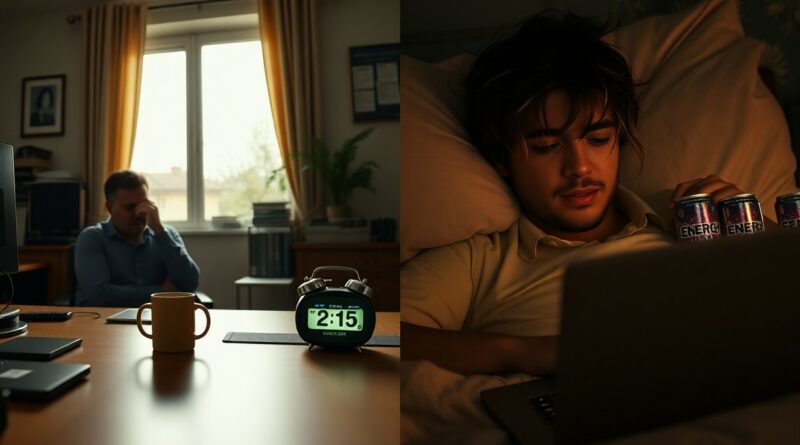
The Difference Between Feeling Tired and Being Sleep Deprived
There’s a clear distinction between everyday fatigue, chronic sleep debt, burnout, and poor sleep quality: you feel temporary tiredness after activity, chronic sleep debt accumulates over days, burnout causes severe physical and mental exhaustion, and improved sleep quality restores daily function.
Key Takeaways:
- Everyday tiredness is temporary and typically relieved by sleep, naps, hydration, or a break from activity.
- Chronic sleep deprivation develops from repeatedly getting insufficient sleep and produces persistent cognitive slowing, mood disturbances, and health risks that a single night of rest won’t fix.
- Burnout overlaps with sleep problems but stems from prolonged stress and leads to emotional exhaustion, reduced motivation, and impaired job performance.
- Poor sleep quality occurs when time in bed does not produce restorative sleep due to fragmentation, breathing issues, or insomnia and can mimic the effects of sleep loss.
- Assessment involves tracking sleep duration and daytime sleepiness, using sleep diaries or wearable data, and consulting a clinician when impairment persists despite adequate opportunity for sleep.
Defining Everyday Fatigue
Everyday fatigue is characterized as a common, temporary state of tiredness typically resulting from daily physical or mental exertion, and you often recover with routine rest; see Fatigue vs. Sleepiness: Why You’re Still Tired After a Full …
Identifying immediate triggers
You can spot immediate triggers such as prolonged mental work, intense physical exertion, a caffeine crash, or skipped meals that produce everyday fatigue and lead to temporary tiredness you can reverse with rest.
Recovery through standard rest cycles
Standard rest cycles-regular night sleep and short naps-help you recover from everyday fatigue; aim for consistent timing to restore energy and reverse temporary tiredness within hours to a day for most people.
Consistent sleep timing stabilizes your recovery from everyday fatigue, which is characterized as a common, temporary state of tiredness typically resulting from daily physical or mental exertion. You restore cognitive performance by allowing full sleep cycles-deep and REM stages-to complete; short naps (20-30 minutes) reduce sleep pressure, while a full night (generally 7-9 hours) resolves most temporary tiredness. Prioritize regular bedtimes and limiting late-night screens so you rapidly recover without drifting into chronic sleep deprivation.
The Mechanics of Sleep Deprivation and Sleep Debt
Chronic sleep debt occurs when an individual consistently fails to meet their physiological sleep requirements over an extended period. You build a sleep deficit that reduces alertness, mood stability, and metabolic health, and long-term deficits increase accident risk.
The cumulative nature of lost sleep
Each night you miss sleep adds to a growing debt, so skipping 1-2 hours repeatedly leaves you far below physiological needs; small deficits compound into significant impairment over weeks.
Physical and cognitive impairments
Sleep loss diminishes reaction time, memory consolidation, and immune function; your judgment and coordination suffer, raising accident and illness risk.
When chronic sleep debt accumulates, you experience slowed reaction times, poorer attention, and weakened immunity alongside hormonal changes that affect appetite and glucose regulation. Researchers link extended sleep debt to higher accident rates and mood disorders; your decision-making and motor skills can be severely compromised, making driving or hazardous work especially dangerous.
Evaluating Poor Sleep Quality
Poor sleep quality is a distinct issue where rest is non-restorative, meaning a person may feel tired regardless of the total hours spent asleep. You should compare symptoms and objective measures; read Sleepiness vs Tiredness vs Fatigue for practical distinctions.
Disruptions to sleep architecture
Fragmentation of REM and slow-wave stages makes sleep non-restorative, so you often wake unrefreshed; evaluate frequent arousals, apnea, or medication effects to protect restorative stages.
Environmental and physiological barriers to deep sleep
Noise, light, temperature swings, and nocturia can prevent deep sleep, leaving you with non-restorative rest and daytime performance deficits.
Medical conditions such as obstructive sleep apnea or restless legs, common medications, and aging can blunt slow-wave sleep; you should pursue screening, tailored treatment, and sleep hygiene changes so that you recover restorative deep sleep rather than accumulating chronic non-restorative fatigue.
Recognizing Burnout as a Distinct State
Burnout is identified as a deep state of emotional, mental, and physical depletion that differs significantly from simple tiredness or sleep loss; see Sleepy vs. tired: Knowing the difference matters for distinctions you should know.
The role of chronic stress in exhaustion
Chronic stress pushes you into prolonged depletion by eroding coping resources, leaving emotional, mental, and physical reserves low; burnout becomes persistent rather than a short-term tiredness that a single night’s sleep can fix.
Why traditional sleep may not resolve burnout symptoms
Sleep alone will not reset you when burnout is present; you still feel deep emotional and physical depletion despite adequate rest because burnout is broader than sleep loss.
You must address routines, workload, and social support because burnout is identified as a deep state of emotional, mental, and physical depletion that differs significantly from simple tiredness or sleep loss; restorative sleep helps, but recovery typically requires boundary changes, psychological strategies, and sustained behavioral adjustments to restore performance and engagement.
Final Words
Presently you should distinguish everyday fatigue (short-term tiredness), the accumulation of sleep debt (lost sleep across days), burnout (complex, chronic emotional exhaustion), and poor sleep quality (fragmented REM/deep sleep) to gauge symptoms, recovery needs, and when to seek professional help.
FAQ
Q: What is the difference between feeling tired and being sleep deprived?
A: Feeling tired is a temporary state of low energy that follows physical exertion, a long day, or a short sleep interruption and usually improves after rest or a normal night of sleep. Being sleep deprived describes a sustained shortfall of sleep relative to your physiological needs; sleep deprivation causes persistent drowsiness, impaired cognition, mood changes, and reduced reaction time that do not reliably resolve after one good night. Feeling tired often has clear, immediate triggers and predictable relief, while sleep deprivation reflects accumulated sleep loss or chronic poor sleep quality with broader daytime impairment and health consequences.
Q: How can I tell whether my tiredness comes from poor sleep quality, sleep debt, or burnout?
A: Poor sleep quality shows up as frequent awakenings, nonrestorative sleep, or difficulty reaching deep sleep stages; you may wake unrefreshed despite adequate time in bed. Sleep debt produces increasing daytime sleepiness, microsleeps, and reduced concentration that build up over days or weeks when nightly sleep hours are consistently below your need. Burnout includes emotional exhaustion, reduced motivation, cynicism toward work or responsibilities, and mental fatigue that can persist even when sleep is sufficient; physical sleepiness may be present but emotional and cognitive symptoms dominate. Track sleep duration, sleep interruptions, mood, and performance over two weeks to separate these causes: inconsistent short sleep points to debt, fragmented sleep points to poor quality, and pervasive disengagement suggests burnout.
Q: What objective signs and simple self-checks help distinguish ordinary fatigue from clinical sleep deprivation?
A: Objective signs of sleep deprivation include frequent daytime nodding or microsleeps, slowed reaction times, impaired short-term memory, and increased errors on routine tasks. Simple self-checks include a sleep diary for two weeks, a daytime sleepiness scale (for example, Epworth Sleepiness Scale), and assessing whether one falls asleep quickly in passive situations such as reading or riding (high propensity indicates sleep debt). Cognitive lapses during tasks, falling asleep unintentionally, and worsening mood or impulse control suggest more than ordinary fatigue and warrant attention.
Q: How quickly can sleep debt be repaid and what practical steps improve recovery?
A: Partial recovery of acute sleep debt often occurs after one to three nights of extended sleep, but full recovery from chronic sleep restriction can take several weeks of consistent, sufficient sleep. Practical steps include establishing a fixed sleep schedule with consistent wake time, extending time in bed by 30-60 minutes nightly until alertness returns, improving sleep hygiene (cool, dark, quiet bedroom; limiting screens before bed; avoiding large meals and caffeine late in the day), and using short daytime naps (15-30 minutes) to reduce acute sleepiness without disrupting night sleep. If sleep remains poor despite these measures, evaluate for sleep disorders, medications, or medical conditions that fragment sleep.
Q: When should I see a healthcare professional about tiredness or suspected sleep deprivation?
A: See a clinician if excessive daytime sleepiness interferes with work, driving, or relationships; if you experience loud snoring with daytime sleepiness, witnessed apneas, or gasping at night; if mood disturbance, cognitive decline, or persistent fatigue do not improve with regular sleep; or if you suspect a sleep disorder such as insomnia, sleep apnea, restless legs, or circadian rhythm disorder. Healthcare evaluation may include screening questionnaires, overnight oximetry or polysomnography, actigraphy, medication review, and assessment for mental health conditions. Early assessment reduces risk of accidents and long-term health effects associated with prolonged sleep deprivation.
