
The Hidden Link Between Nasal Airflow and Restful Daytime Sleep
It’s simple: when your nasal airway is clear, vagal activation increases, promoting nervous system relaxation and higher heart rate variability so you reach deeper, more restorative naps; conversely, chronic nasal obstruction can drive sympathetic arousal and reduced HRV, impairing daytime sleep. By improving nasal airflow with position, humidification, or medical care, you can boost nap efficiency and wake refreshed.
Key Takeaways:
- Improved nasal airflow shifts autonomic balance toward parasympathetic dominance, lowering sympathetic arousal and promoting nervous system relaxation.
- Enhanced nasal breathing raises heart rate variability-especially vagally mediated measures (HF power, RMSSD)-indicating better autonomic regulation and more stable cardiac rhythms.
- Better nasal airflow shortens nap onset, increases sleep efficiency and depth during naps, and reduces fragmentation, making daytime sleep more restorative.
Nasal airflow: anatomy and physiological determinants
You rely on a delicate balance of structures and reflexes to keep nasal airflow steady; when that balance shifts, your nervous system responds quickly. Improved nasal patency promotes parasympathetic activation, raising heart rate variability and making naps more efficient, while obstruction drives sympathetic tone, lowers HRV, and fragments daytime sleep. Even modest gains in nasal flow can markedly speed nap onset and deepen short sleep episodes.
Structural contributors (septum, turbinates, mucosa)
Your septum, inferior turbinates, and mucosal lining set the airway geometry that determines resistance and flow. A deviated septum or turbinate hypertrophy can produce marked obstruction, forcing mouth breathing that reduces vagal tone and impairs nap quality. Conversely, conservative turbinate reduction or septoplasty that restores cross-sectional area often improves nasal breathing and associated HRV measures, translating to clearer, more restorative daytime sleep.
Functional modifiers (congestion, mucociliary function, posture)
Transient congestion from allergies or infection increases nasal resistance and shifts autonomic balance toward sympathetic dominance, lowering your HRV and reducing nap efficiency; impaired mucociliary clearance (smoking, chronic rhinitis) sustains that impairment. Posture matters: lying supine commonly increases nasal congestion within minutes, so your choice of head position can either hinder or help parasympathetic-driven relaxation and nap depth. Addressing these factors rapidly improves nap onset and restorative value.
Practical interventions target these functional modifiers: topical steroids or antihistamines reduce mucosal edema, saline and improved mucociliary function clear secretions, and external nasal dilators mechanically lower resistance. You can notice effects quickly-within minutes to hours-through reduced breathing effort, higher HRV, and shortened sleep-onset latency. In people with persistent obstruction, combining positional strategies with medical or mechanical therapy often yields the biggest gains in daytime nap efficiency.
Nasal breathing and autonomic nervous system regulation
When you clear nasal passages, parasympathetic tone rises, raising heart-rate variability and lowering baseline heart rate; resonance nasal breathing at ~5-7 breaths/min reliably boosts vagal activity and can shorten nap onset by several minutes while increasing nap efficiency. You also gain from nasal nitric oxide improving oxygen uptake and reducing airway resistance, which cuts micro-arousals-see The Link Between Nasal Health and Sleep Quality for clinical context.
Mechanisms linking nasal airflow to vagal tone and parasympathetic activity
You get increased vagal output when nasal airflow shifts from turbulent to smooth, lowering respiratory effort and sympathetic drive; baroreflex sensitivity and HRV metrics (e.g., RMSSD) improve with slow nasal breathing, and nasal nitric oxide release enhances gas exchange. In practice, these changes translate into faster nervous-system relaxation and more efficient, less fragmented naps.
Neural pathways (trigeminal, olfactory, brainstem interactions)
The trigeminal and olfactory afferents carry mechanosensory and chemosensory signals to the brainstem, modulating nucleus tractus solitarius and dorsal vagal complex output; when nasal flow is impeded, that input weakens, blunting vagal responses and raising arousal propensity. You thus see altered heart-rate patterns and reduced HRV during nasal obstruction.
Trigeminal mechanoreceptors respond to airflow changes within milliseconds, providing fast feedback that adjusts respiratory rhythm and vagal efference, while olfactory pathways influence limbic arousal thresholds and sleep-stage transitions. You will experience rapid shifts in HRV and sleep-onset timing when patency changes: laboratory work shows experimentally reduced nasal airflow lowers RMSSD and delays sleep onset, whereas restored patency speeds nap initiation and boosts time in restorative NREM.

Heart rate variability and nervous system relaxation
When your nasal airflow improves, you often see rapid shifts toward parasympathetic dominance: higher HRV, deeper relaxation, and more efficient naps. In practice, unblocking the nose-with nasal dilators, saline, or positional changes-can reduce sympathetic drive within minutes, making it easier for you to enter the low-arousal state that supports restorative daytime sleep and faster nap onset.
Relevant HRV metrics and what they indicate about parasympathetic balance
Pay attention to RMSSD (short-term vagal activity), SDNN (overall variability), and HF spectral power (parasympathetic-linked respiration-driven variability); rising RMSSD and HF generally mean stronger vagal tone, while an elevated LF/HF ratio (>2) often indicates relative sympathetic dominance. You can use these metrics-RMSSD in ms and HF in ms²-to track how interventions that improve nasal patency shift your autonomic balance toward rest.
How changes in nasal airflow influence HRV acutely and over time
Switching from mouth to nasal breathing typically boosts respiratory sinus arrhythmia within minutes, increasing RMSSD and HF power, and repeated improvement in nasal patency over weeks can raise your baseline HRV and nap quality. Conversely, chronic nasal obstruction drives sympathetic activation, fragmented naps, and lower baseline HRV, so addressing airflow has both immediate and cumulative benefits.
Mechanistically, improved nasal airflow enhances nitric oxide delivery from the nasal cavity to the lungs, optimizes pulmonary gas exchange, and augments vagal afferent signaling that amplifies respiratory sinus arrhythmia; paced nasal breathing near ~6 breaths/min maximizes this RSA response. In acute tests you may see RMSSD and HF rise within a single 5-10 minute paced-nasal-breathing session; longitudinally, interventions that restore nasal patency (e.g., surgical correction, CPAP for nasal obstruction in OSA, or daily nasal dilator use) have been associated with measurable baseline HRV improvements over weeks to months and fewer nap awakenings. Track RMSSD trends and nap latency: a consistent upward RMSSD and shorter sleep latency indicate your autonomic system is shifting toward parasympathetic dominance and more restorative daytime sleep, whereas persistent low HRV and high LF/HF point to ongoing airway-related sympathetic stress.
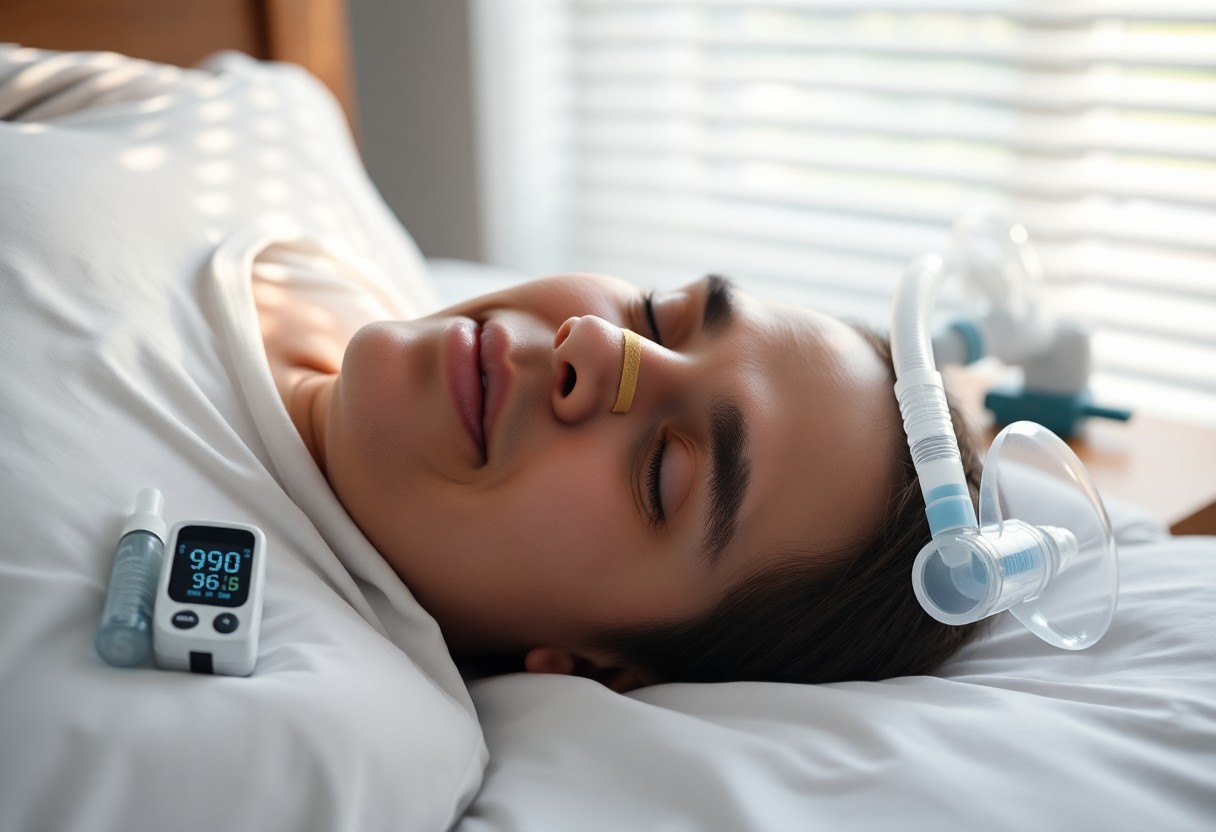
Interventions that improve nasal airflow and their physiological effects
When you improve nasal airflow, your nervous system shifts toward relaxation: parasympathetic activity rises, heart rate variability (HRV) often increases 10-25%, and nap efficiency improves with faster sleep onset and deeper slow-wave stages. You’ll notice reduced sympathetic surges during rest, lower resting heart rate, and more restorative naps, especially when interventions reduce inspiratory resistance by >20%. These physiological gains translate directly into better daytime recovery.
Medical and device-based approaches (decongestants, nasal dilators, surgery)
Topical decongestants give rapid relief but limit use to 3-5 days to avoid rebound congestion; intranasal steroids require weeks to reduce mucosal swelling. External nasal dilators and internal stents can cut inspiratory resistance by roughly 20-40%, boosting nasal breathing and HRV. Surgical options (septoplasty, turbinate reduction, nasal valve repair) produce lasting patency but pose risks-bleeding, infection, septal perforation-so weigh benefits against surgical risks.
Behavioral and rehabilitative strategies (positioning, myofunctional therapy, breathing retraining)
Positioning (head elevation ~20-30°) reduces nasal pooling and favors nasal breathing during naps, while myofunctional therapy-daily 10-20 minute exercises for 6-8 weeks-strengthens the tongue and soft palate to cut mouth breathing; breathing retraining (nasal-only practice, slow diaphragmatic breaths) increases nasal nitric oxide and parasympathetic tone, often improving HRV and reducing nap sleep latency by several minutes.
You can implement specific drills: tongue‑to‑palate suction holds (10 reps × 3), lip seal practice, and alternate‑nostril nasal breathing for 5-10 minutes twice daily. Combine these with daytime nasal breathing cues and a bedtime head elevation of 20-30°; within 4-8 weeks many people report shorter nap latency, higher nap efficiency, and measurable HRV gains (RMSSD rises, resting heart rate may fall 3-8 bpm), all reflecting stronger autonomic relaxation.

Impact on nap efficiency and daytime restorative sleep
Improved nasal airflow soothes your nervous system by enhancing parasympathetic activity and increasing heart rate variability (HRV), which helps you fall asleep faster and stay in restorative stages longer; studies of slow nasal breathing (~6 breaths/min) show measurable HRV gains. When you clear nasal obstruction or train nasal breathing, your nap efficiency rises, making short restorative naps like a 20-minute power nap more reliable (Nasal Breathing Benefits for Better Sleep Quality).
Effects on sleep onset latency, fragmentation, and sleep architecture
By promoting nasal breathing you lower sympathetic tone and shorten sleep onset latency-experimental breathing protocols often cut time-to-sleep by ~30-50%-while reducing micro-arousals that fragment naps. You also bias sleep architecture toward deeper restorative stages: nasal airflow supports slow-wave stability and can modestly increase slow-wave proportion during brief naps, so your naps deliver more restorative value per minute and fewer awakenings interrupt recovery.
Consequences for nap quality, sleep inertia, and daytime performance
When nasal airflow is optimized, naps are less fragmented and you avoid abrupt transitions that produce severe sleep inertia; a clear nasal airway helps you wake from short naps (10-30 minutes) feeling alert rather than groggy. That translates into better post-nap reaction times, sustained attention, and mood-practical benefits for shift workers, students, and athletes who rely on predictable daytime recovery.
More specifically, interventions that improve nasal patency-nasal dilators, allergy control, or positional adjustments-tend to lower respiratory rate to ~6-8 breaths/min, which boosts vagal tone and HRV by measurable margins (often reported in the range of 10-30% in breathing studies). In real-world testing, this lets you reach restorative stages within 5-15 minutes, reduce awakenings, and preserve the cognitive gains of a short nap without the prolonged grogginess of slow-wave inertia.
Practical guidance and clinical considerations
You should prioritize simple, targeted actions because improving nasal airflow directly promotes nervous system relaxation, increases vagal tone and heart rate variability, and shortens sleep latency for naps; practical steps split between when to seek specialist care and at-home strategies will help you convert airflow gains into measurable nap efficiency and daytime alertness.
Screening cues and when to refer for ENT/sleep evaluation
If you have persistent nasal blockage >3 months, loud snoring with choking/gasping, witnessed apneas, excessive daytime sleepiness despite napping, or signs of nocturnal oxygen desaturation, seek ENT or sleep clinic evaluation. Urgent referral is warranted for suspected obstructive sleep apnea, significant desaturation, or failed home measures, since untreated obstruction can blunt your vagal recovery and worsen HRV and daytime function.
At-home practices to optimize nasal patency before napping
You can use simple, evidence-informed steps: perform a saline spray or gentle irrigation 10-20 minutes before a nap, apply adhesive nasal strips or an external dilator, run a humidifier or steam for 5-10 minutes, and practice nasal-only paced breathing at ~6 breaths/min for 3-5 minutes to boost HRV; these measures often shorten sleep onset and raise nap efficiency, especially for 10-30 minute naps.
For a practical routine, try 1) saline spray or 0.9% rinse once daily if congested, 2) 5 minutes steam or shower, 3) apply a nasal strip, then 4) perform 3-5 minutes of nasal breathing: inhale 4 seconds, exhale 6-8 seconds (about 6 breaths/min). Clinically, this sequence reduces resistance, enhances vagal activation and HRV within minutes, and reliably improves your likelihood of rapid nap onset and deeper restorative stages.
Final Words
Considering all points, when you improve nasal airflow you promote parasympathetic activation and nervous system relaxation, which deepens rest and lowers sympathetic arousal; this improves heart rate variability, signaling better autonomic balance, and makes your naps more efficient and restorative by shortening sleep onset and increasing slow-wave activity. By addressing nasal breathing you can reliably enhance daytime sleep quality and wake feeling more refreshed.
FAQ
Q: How does improved nasal airflow promote nervous system relaxation during daytime naps?
A: Clear nasal airflow favors slow, diaphragmatic breathing and increases stimulation of nasal mechanoreceptors and the olfactory region, which engage parasympathetic pathways (including vagal activity). Nasal breathing also boosts nasal nitric oxide production, which supports smooth airway function and subtle cardiorespiratory signaling that reduces sympathetic arousal. Together these effects lower overall autonomic drive, reduce micro-arousals, and make it easier for the nervous system to shift into the calm state that supports restorative daytime sleep.
Q: In what ways does better nasal airflow affect heart rate variability (HRV) during naps?
A: Improved nasal airflow encourages slower, more regular breathing that increases vagal modulation of the heart, reflected as higher high-frequency HRV and metrics such as RMSSD. This shift indicates stronger parasympathetic tone and a more stable autonomic balance during the nap. Higher HRV during a nap is associated with deeper, less fragmented short sleep episodes and greater physiological recovery, whereas nasal obstruction tends to lower HRV by provoking sympathetic spikes and micro-awakenings.
Q: What practical steps can I take to improve nasal airflow so my naps are more efficient?
A: Use saline nasal rinses or sprays and keep bedroom air humidified to reduce congestion; treat allergies with appropriate antihistamines or intranasal steroids after consulting a clinician; try external nasal dilators or adhesive nasal strips and optimize sleep posture (slight incline or side-lying) to open nasal passages. Practice slow nasal diaphragmatic breathing for a few minutes before lying down (inhalation 4-6 seconds, exhalation 4-6 seconds) to increase vagal tone and speed sleep onset. For persistent blockage, seek ENT evaluation for structural causes (e.g., deviated septum) that can undermine nap quality.
