
How Long Should a Nap Be When You Use CPAP or an Oral Appliance? {Sleep‑optimization content targeting timing and circadian rhythm searches.
You should keep naps short when using CPAP or an oral appliance: 20-30 minutes in the early afternoon maximizes alertness and supports your therapy without deep-sleep inertia. Avoid long or late naps (over 90 minutes or late afternoon/evening) because they can disrupt your circadian rhythm and reduce nighttime sleep quality. Timed, brief naps provide a safe, effective boost while preserving your treatment benefits and nighttime restorative sleep.
Key Takeaways:
- Keep naps short (10-20 minutes) to boost alertness without deep-sleep inertia; use your CPAP mask or oral appliance during naps to maintain airway support and treatment effectiveness.
- If you need a longer nap, aim for a full sleep cycle (~90 minutes) to avoid grogginess; schedule naps earlier in the day (ideally before 3:00 PM) to protect nighttime sleep and circadian timing.
- Be consistent with nap timing and device use; persistent daytime sleepiness or discomfort with CPAP/oral appliance warrants discussion with your sleep provider to adjust therapy or investigate other causes.
Understanding CPAP and Oral Appliances
CPAP delivers continuous positive airway pressure to keep your airway open, while oral appliances reposition your jaw to prevent collapse. CPAP is the most powerful option, often reducing obstructive events by over 90%, whereas oral appliances succeed in about 50-70% of mild-to-moderate cases. You should weigh effectiveness against practicality: CPAP needs a machine and mask during sleep, and oral devices require dental fitting and periodic adjustment to maintain results.
Overview of Sleep Apnea Treatment
Severity guides treatment: apnea-hypopnea index (AHI) of 5-15 is mild, 15-30 moderate, and >30 severe. You’ll typically be prescribed CPAP for moderate-severe OSA, while an oral appliance is appropriate if you have mild OSA or can’t tolerate PAP. Objective measures matter-polysomnography or home sleep testing and follow-up device data (usage hours, residual AHI) determine success. Aim for ≥4 hours/night on most nights to count as effective therapy.
Importance of Proper Use
Adherence, fit, and ongoing adjustments determine whether therapy reduces your health risks; untreated OSA roughly doubles your risk of cardiovascular events and raises daytime crash risk. You must ensure mask seal, correct pressure settings, and dental alignment for oral devices because leaks, underpressure, or bite changes can negate benefits or cause harm. Regular follow-up and objective usage data protect your therapy’s effectiveness.
Practical steps improve outcomes: use heated humidification, try different mask styles, enable ramp/auto‑PAP features, and get dental retitration within 6-12 months. If your CPAP downloads show low usage or residual AHI >5, request a titration or pressure adjustment; if your oral appliance causes jaw pain or tooth movement, stop use and consult your dentist. Weight changes >10% or persistent daytime sleepiness warrant re-evaluation. These measures maximize the positive effects and reduce the most dangerous consequences of inadequate therapy.
Napping: The Basics
When you need a midday recharge, targeted naps restore alertness and reduce errors without pushing you into prolonged deep sleep. With a fitted CPAP or oral appliance, naps can be safe and effective-aim for 10-20 minutes for an immediate boost or ~90 minutes for a full sleep cycle to gain REM benefits. The best window typically falls in the mid-afternoon, around 1-3 p.m., aligned with your circadian rhythm.
Benefits of Napping
Naps improve vigilance, speed reaction time, and help consolidate short-term memory; a 10-20 minute nap can raise alertness for up to three hours, while a 90-minute nap supports emotional regulation through REM. Using your CPAP or oral appliance during naps preserves breathing stability and maximizes cognitive gains. The magnitude of benefit depends on nap length, prior sleep debt, and timing relative to your schedule.
- Improves alertness for several hours after a 10-20 minute nap
- Supports memory consolidation with 60-90 minute naps that include REM
- Reduces daytime sleepiness and task errors
- The enhances cardiovascular recovery (e.g., modest blood pressure reduction) following restorative naps
| Alertness | 10-20 min → immediate performance boost; benefits last ~2-3 hours |
| Memory | 60-90 min → procedural and emotional memory consolidation (REM + SWS) |
| Mood | Short naps lower irritability; longer naps improve emotional regulation |
| Performance | Fewer lapses on attention tasks; some studies report ~30-40% error reduction |
| Breathing stability | With CPAP or oral appliance, naps maintain airway patency and reduce fragmentation |
Types of Naps
You can choose a nap style that matches your goals: a 10-20 minute power nap for quick alertness, a 30-60 minute nap that may include slow-wave sleep for recovery, or a 90-minute full-cycle nap to capture REM and SWS. Keep your CPAP or oral appliance on to prevent airway collapse and avoid fragmented sleep. The selection should reflect your next tasks and accumulated sleep debt.
Data show a 10-20 minute nap reduces attention lapses by roughly 30-40%, while 60-90 minute naps improve procedural learning by up to ~40-50% in some trials. If you use CPAP, check mask seal and humidification-leaks and discomfort are the most common nap disruptors. Shift workers often benefit from strategic short naps timed to their circadian rhythm. The evidence favors brief naps for rapid alertness and longer naps for memory and mood.
- Power nap: 10-20 min – immediate alertness, minimal inertia
- Slow-wave nap: 30-60 min – deep restorative benefits, possible inertia
- Full-cycle nap: ~90 min – REM + SWS, memory consolidation
- Split/strategic naps: multiple short naps for shift schedules or extended wakefulness
- The use of CPAP or an oral appliance during naps helps maintain breathing and quality
| Power nap | 10-20 min – boosts alertness, minimal sleep inertia |
| Short/slow-wave nap | 30-60 min – enters SWS, aids physical recovery but may cause grogginess |
| Full-cycle nap | ~90 min – completes REM and SWS, benefits memory and mood |
| Split naps | Multiple brief naps – useful for night shifts or prolonged wakefulness |
| Device use | Wearing CPAP or oral appliance maintains airway patency and reduces fragmentation |
Optimal Nap Length for CPAP Users
When you nap wearing CPAP, aim for 10-20 minutes to restore alertness without entering deep slow-wave sleep; using your machine during naps maintains airway patency and reduces daytime obstructive events. For further guidance, review I Have Sleep Apnea – Is It Okay to Take a Nap?
Research Findings
Short naps of 10-20 minutes reliably improve vigilance for about 1-3 hours, whereas naps over 30 minutes often trigger sleep inertia and deeper stages. Studies indicate daytime CPAP use reduces subjective sleepiness and cognitive lapses, and removing CPAP for a nap can allow obstructive events to recur within minutes, negating benefits.
Recommended Duration
You should limit naps to 10-20 minutes while using CPAP to maximize alertness, preserve nighttime sleep pressure, and avoid post-nap grogginess that interferes with evening sleep onset.
If you want practical steps, set an alarm for 20 minutes, don your mask before lying down, enable ramp/humidification for comfort, and nap during the typical circadian dip (about 1-4 pm). Sit up and hydrate for 10 minutes if you wake groggy; reserve a ~90-minute full-cycle nap only rarely, since longer naps-and especially removing your device-increase the chance of returning apneas and daytime impairment.
Optimal Nap Length for Oral Appliance Users
When you use an oral appliance, short naps of 10-20 minutes are best: they boost alertness without entering deep slow‑wave sleep that can leave you groggy. If you nap during the post‑lunch circadian dip (about 1-3 p.m.), keeping it brief preserves the appliance’s benefit for airway support while minimizing positional or jaw‑relaxation risks that can worsen breathing in some people.
Research Findings
Studies show 10-20 minute naps reliably improve vigilance, while naps >30 minutes often trigger slow‑wave sleep and inertia; naps of 60-90 minutes allow a full cycle and memory consolidation. Oral appliances typically reduce AHI by about 30-50% in responders, so brief naps maintain therapy gains, but evidence is limited for nap‑specific outcomes in severe OSA.
Recommended Duration
Your safest choice is a 10-20 minute power nap while keeping the oral appliance in place; set an alarm and avoid supine positions when possible to limit airway collapse. If you need longer restorative sleep, plan a 60-90 minute nap only when you can lie safely and aren’t at high OSA risk.
For more detail: set a 20‑minute timer, sit or recline at ~30-45° to reduce supine effects, and hydrate to offset dry mouth. If your baseline AHI is >15-30 or you snore heavily despite the appliance (possible treatment failure), avoid unsupervised long naps and consult your sleep specialist before changing nap habits.
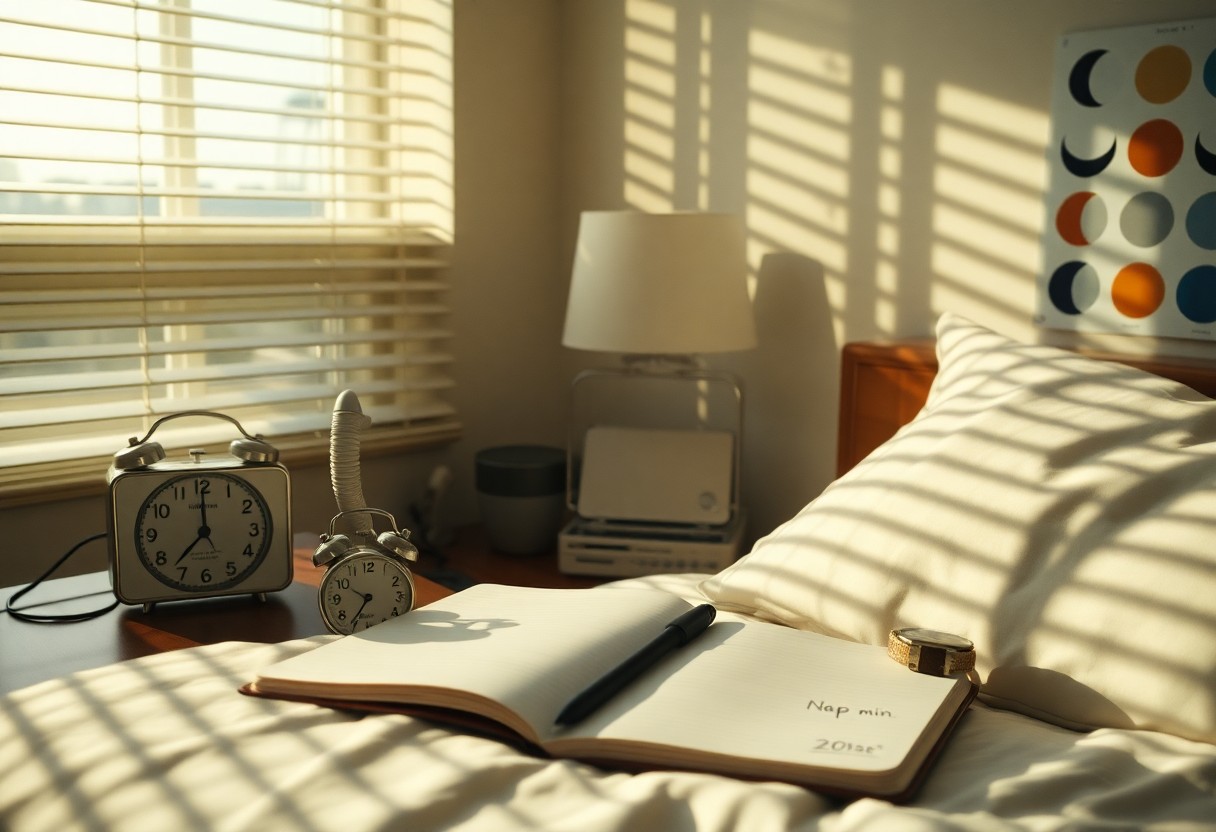
Timing Your Nap According to Circadian Rhythms
Sync naps with your natural early-afternoon dip: aim for a brief rest when your circadian drive is lowest, typically 1-3 p.m.. Short naps then give the biggest alertness gains without compromising nighttime sleep; if you have apnea, consult I Have Sleep Apnea – Is It Okay to Take a Nap? and use your CPAP or oral appliance during naps to maintain therapy and safety.
The Role of Circadian Rhythms
Your circadian rhythm produces a predictable low in alertness about 7-9 hours after waking, so your nap effectiveness depends on that timing. Homeostatic sleep pressure climbs with time awake, and when it overlaps the circadian dip you get stronger sleep propensity. If you nap too late, it can delay nighttime sleep onset and reduce sleep efficiency, especially when you already use sleep-disordered-breathing therapy.
Best Times to Nap
For most people, the optimal window is early afternoon; aim for a 10-20 minute power nap to boost vigilance without entering deep sleep. When you need more recovery, a 90-minute nap completes a full sleep cycle (slow-wave plus REM) but avoid naps after 4 p.m. to minimize night sleep disruption.
If you wake at 6-7 a.m., plan your nap roughly 7-8 hours later (around 1-3 p.m.); shift workers should schedule naps about 6-8 hours into their wake period. Short naps target stage 1-2 sleep and reliably improve alertness and reaction time, and you should use your CPAP or oral appliance during naps and trial timing on days off to confirm it doesn’t impair your nighttime sleep.
Tips for Enhancing Nap Quality
To make short naps more effective when you use a CPAP or an oral appliance, dial in timing, environment, and prep: set a 10-20 minute timer, verify mask seal or appliance fit, and reduce interruptions by silencing devices. Add a 3-5 minute calming routine to lower arousal before lying down. The sweet spot is 10-20 minutes for most CPAP and oral appliance users.
- Keep naps to 10-20 minutes to avoid deep slow-wave sleep.
- Confirm mask fit or appliance position before lie-down.
- Use low-level white noise or earplugs to maintain under 45 dB.
- Set alarms and place phone screen-down to prevent interruptions.
Environment and Setup
Optimize room temperature (about 18-22°C / 64-72°F), use blackout shades, and position your CPAP hose so it won’t tug the mask when you shift; if you use an oral appliance, follow your provider’s guidance on wearing it for naps. Keep ambient sound steady-white noise at ~40-45 dB helps-and if you detect persistent mask leaks or increased sleepiness, contact your clinician.
Pre-Nap Rituals
Spend 3-5 minutes on a simple routine: check mask seal or appliance seating, dim lights, and perform slow diaphragmatic breathing (4-6 breaths per minute) to reduce heart rate; optionally use the caffeine-nap method-consume ~80-100 mg caffeine then nap for 20 minutes if you need a stronger boost.
For more structure, follow a three-step sequence: (1) equipment check-inspect mask cushion and tubing for leaks, (2) environmental cues-lower light and set timer, and (3) physiological downshift-use progressive muscle relaxation or a 4-7-8 breathing set (four-second inhale, seven-second hold, eight-second exhale) for 2-4 cycles; these steps lower arousal quickly and improve the chance you wake refreshed without entering deep sleep.
Summing up
To wrap up, when you nap using CPAP or an oral appliance aim for a short 20-30 minute nap during the early afternoon circadian dip to boost alertness without deep‑sleep inertia; if you need longer, choose a ~90‑minute cycle to complete REM and slow‑wave stages. Avoid late‑day naps within 4-6 hours of bedtime, use your device during the nap, and adjust timing to your sleep schedule for the best restorative effect.
FAQ
Q: How long should I nap if I use a CPAP or an oral appliance?
A: Short “power” naps of 10-20 minutes are usually best for restoring alertness without causing sleep inertia or disrupting nighttime sleep; they provide a quick boost with minimal entry into deep sleep stages. Naps around 30 minutes often lead to grogginess because they can include slow-wave sleep. A full 90-minute nap can complete a full sleep cycle (light, deep, REM) and support memory consolidation, but it increases the chance of interfering with your core night sleep and requires continued use of your device for the whole nap. If you use CPAP, keep the device on during any nap to maintain airway support and avoid fragmented sleep. If you use an oral appliance, wear it as prescribed during the nap so the airway remains stabilized; brief naps without the appliance can let obstructive events recur.
Q: When during the day is the best time to nap while using CPAP or an oral appliance?
A: The optimal window for most people is the early afternoon (roughly 1:00-3:00 PM), which aligns with the natural circadian “post‑lunch” dip and is less likely to delay nighttime sleep. Avoid naps late in the afternoon or evening (generally after 4:00 PM) because they can push your sleep drive later and make falling asleep at night harder. For shift workers or people with nonstandard sleep schedules, schedule naps to support alertness during wake periods while keeping a consistent nap timing relative to your primary sleep episode. Track how nap timing affects your ability to fall asleep at night and adjust accordingly.
Q: What practical steps should I take before and during a nap with CPAP or an oral appliance?
A: For CPAP: use the mask and device during the nap, enable ramp or lower starting pressure if available for comfort, ensure humidifier settings are comfortable to reduce dryness, and fasten the mask properly to avoid leaks during a short nap. For oral appliances: insert the device before lying down, avoid eating right before inserting the appliance, and check fit to reduce jaw discomfort. Set an alarm to control nap length, recline to a comfortable position that keeps the airway open, and keep spare tubing, mask cushions, or a case for the oral appliance nearby. If you experience frequent daytime sleepiness despite naps and proper device use, consult your sleep clinician to reassess therapy efficacy and timing.
