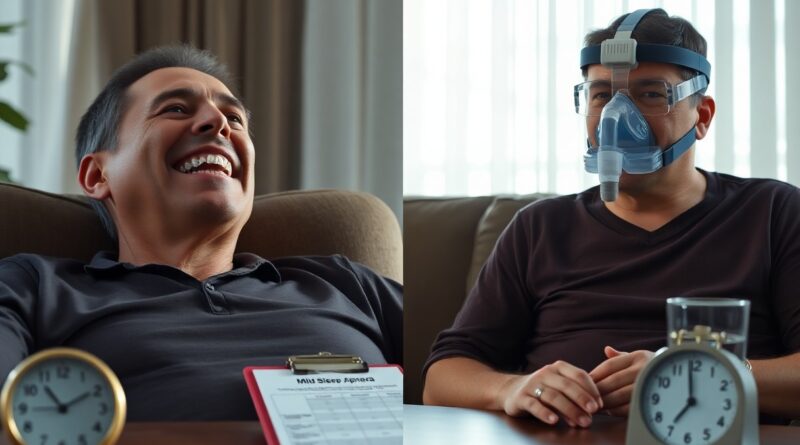
Oral Appliance vs CPAP for Mild Sleep Apnea and Naps {Medical comparison article tailored to mild apnea and daytime sleep.
Oral appliances and CPAP both treat mild sleep apnea and nap-related sleepiness, and you should compare efficacy, comfort, portability, and adherence when choosing therapy. CPAP remains the most effective at preventing airway collapse, while oral devices are portable and often better tolerated for naps and light daytime sleep. Also weigh side effects and follow your clinician’s guidance because untreated mild apnea can increase your blood pressure and cardiovascular risk.
Key Takeaways:
- CPAP is the most effective therapy for normalizing breathing and reducing AHI; mandibular advancement oral appliances (MADs) are effective for many cases of mild OSA and are often more convenient for naps and travel due to portability and higher short‑term adherence.
- Choose CPAP when daytime sleepiness is significant, AHI is higher, or there is cardiovascular/metabolic risk; consider a MAD when OSA is mild, symptoms are minimal, or patient preference/comfort favors an oral device.
- Both options have side effects and require follow‑up: CPAP can cause mask discomfort, nasal symptoms, and adherence issues; MADs can cause jaw pain and dental changes-objective follow‑up (sleep testing or symptom monitoring) is needed to confirm treatment effectiveness.

Understanding Sleep Apnea
Definition and Types
You have repetitive reductions (hypopneas) or pauses (apneas) in breathing during sleep caused by airway collapse or loss of respiratory drive; AHI quantifies severity (mild 5-15, moderate 15-30, severe >30), and treatment choice depends on whether events are obstructive, central, mixed, positional, or REM-related. After a diagnostic sleep study confirms an AHI in the mild range, your symptoms, nap frequency, cardiometabolic risks, and positional patterns guide whether CPAP or a mandibular advancement device is preferable.
- Obstructive Sleep Apnea (OSA)
- Central Sleep Apnea (CSA)
- Mixed Sleep Apnea
- Positional/REM-related
| Obstructive (OSA) | Recurrent upper-airway collapse with loud snoring and arousals; often daytime sleepiness and cardiovascular risk. |
| Central (CSA) | Reduced respiratory drive, less snoring, associated with heart failure, stroke, or opioid use. |
| Mixed | Combination of central and obstructive elements; seen during transitions or worsening disease. |
| Positional / REM-related | Events occur mainly when supine or in REM sleep; AHI may be mild but symptoms can be significant. |
| Upper Airway Resistance / Pediatric patterns | Increased respiratory effort with arousals despite low AHI; in children can present as behavioral changes rather than classic sleepiness. |
Symptoms and Diagnosis
You commonly notice loud snoring, witnessed pauses, fragmented sleep, or excessive daytime sleepiness measured by the Epworth Sleepiness Scale (ESS >10 often signals clinically relevant sleepiness); diagnosis relies on polysomnography or home sleep apnea testing, though HSATs can miss mild cases and isolated REM/positional events.
You should expect night-to-night variability-AHI can change by ~20-30%-so if symptoms persist despite a borderline HSAT, a full in-lab polysomnogram is warranted; oximetry alone underestimates hypopneas, and split-night studies may miss REM-predominant events. Studies show mild OSA with daytime naps still carries increased risk for impaired vigilance and accidents, so integrate symptom burden, comorbidities (hypertension, coronary disease), and objective AHI when deciding between CPAP, an oral appliance, positional measures, or watchful waiting.
Treatment Options for Mild Sleep Apnea
For mild OSA you typically weigh effectiveness against tolerability: CPAP normalizes breathing most reliably, while mandibular advancement devices (MADs) often deliver meaningful symptom relief with better nightly use. You should consider your AHI, BMI, positional dependency and dental status when choosing; for example, MADs work best when AHI is <15 and BMI is under ~30, whereas CPAP remains preferable if your AHI approaches moderate range or symptoms persist despite an oral device.
Overview of CPAP
CPAP delivers continuous positive airway pressure (commonly titrated between 4-20 cm H2O) to splint the airway, often reducing AHI to below 5 in responders. You’ll see side effects like mask leak, nasal congestion or pressure intolerance, and real-world adherence hovers around half of users achieving ≥4 hours/night; if you can tolerate it, CPAP gives the most consistent reduction in apnea-related cardiovascular and daytime-sleepiness risks.
Overview of Oral Appliances
Mandibular advancement devices push your lower jaw forward (typically 5-10 mm), enlarging the airway and commonly reducing AHI by about ~50% on average in mild cases; you’ll find them more comfortable for naps and travel, with higher nightly use than CPAP but generally less potency for severe obstruction.
Custom, titratable MADs require dental fitting and follow-up sleep testing to confirm efficacy; expect possible jaw soreness, increased salivation or occlusal changes over time (reported in roughly 5-15% of users). You should have a dental/TMJ exam first, plan periodic reassessments and consider cost/insurance-custom devices often run in the low thousands-before committing long-term.
Comparative Effectiveness
When weighing CPAP versus oral appliances for mild apnea and naps, you should note CPAP often achieves 80-90% AHI reduction while mandibular advancement devices typically deliver 40-60% AHI reduction. For head-to-head and positional comparisons, see Comparative efficacy of sleep positional therapy, oral ….
Comparative Snapshot
| CPAP | Oral Appliance (MAD) |
|---|---|
| AHI reduction: ~80-90% while worn | AHI reduction: ~40-60% on average |
| Adherence: variable; many use ≥4 hrs/night | Adherence: generally higher comfort; more consistent day naps |
| Best for: any severity, severe apnea | Best for: mild-moderate, positional or retrognathic cases |
| Side effects: nasal congestion, mask leak | Side effects: jaw pain, dental movement |
Efficacy of CPAP
You get the most reliable AHI suppression with CPAP-studies report normalization of breathing in most users when the device is used nightly; typical adherence yields ~4-6 hours/night and consistent use lowers daytime sleepiness and cardiometabolic risk, so for naps you can expect near-complete airway patency while the device is on.
Efficacy of Oral Appliances
You’ll find oral appliances often improve symptoms and daytime function in mild OSA, with higher comfort and real-world use during short naps; they’re most effective when your AHI is <15, you're non-obese, or apnea is positional, but they rarely match CPAP's full AHI normalization.
More detail: you should expect success (≥50% AHI reduction or AHI <10) in roughly 50-70% of mild cases, with predictors including lower BMI, lower baseline AHI and mandibular advancement capability; common long-term issues are dental alignment changes in ~5-15%, so regular dental follow-up and titration are imperative for sustained benefit.
Comfort and Usability
How easily you tolerate therapy determines real-world benefit: CPAP often normalizes breathing but has adherence rates around 50% for ≥4 hours/night long-term, while oral appliances are quieter, more portable, and generally easier for naps and travel. You’ll weigh mask fit, noise, humidification, jaw comfort, and dental side effects; for many with mild OSA or short daytime naps, convenience and comfort drive consistent use more than maximal AHI reduction.
User Experience with CPAP
CPAP delivers continuous pressure (typically 4-20 cmH2O) through nasal, nasal-pillow, or full-face masks; you may prefer auto-adjusting modes and humidification to reduce nasal dryness and aerophagia. Masks can leak or cause skin irritation, and noise or pressure intolerance commonly reduce nightly use. When used consistently you get the greatest AHI reduction (often >70%), but practical barriers-mask fit, claustrophobia, travel logistics-often limit real-world adherence.
User Experience with Oral Appliances
Mandibular advancement devices (MADs) advance your lower jaw typically 4-7 mm, are custom or boil-and-bite, and usually lack noise or hoses, making them easy for naps and travel; studies show average AHI reductions around 40-60% for mild OSA and higher nightly adherence than CPAP. You may experience jaw soreness, increased salivation, or tooth discomfort initially. Portability and comfort often drive superior day-to-day use compared with CPAP.
Expect regular dental follow-up: you should have baseline dental/occlusal records and rechecks every 6-12 months because long-term tooth movement and bite changes occur in roughly 10-30% of users over years. Adjustment titration (millimeter-level changes) improves efficacy for many: a trial advancing 1-2 mm every few weeks is typical, and objective home sleep testing after titration confirms effectiveness for naps and overnight use.
Impact on Daytime Function
Daytime alertness, reaction time, and mood are often the first things you notice changing with mild OSA treatment; studies show CPAP and oral appliances can lower Epworth Sleepiness Scale (ESS) scores by roughly 1-4 points depending on adherence and baseline AHI. You may see faster improvements in vigilance and fewer micro-arousals with therapies that reduce AHI below 5 events/hour, which directly lowers risk of daytime cognitive lapses and driving incidents.
Effectiveness of CPAP on Naps
When you wear CPAP during a nap it typically normalizes breathing almost immediately, often reducing AHI to <5 while in use, and improving nap continuity and slow-wave sleep. Portable travel CPAPs make this practical; however, benefit requires you to use the device for the entire nap. Untreated nap apneas still provoke arousals and transient hypoxia, increasing daytime sleepiness and cardiovascular strain.
Effectiveness of Oral Appliances on Naps
Mandibular advancement devices (MADs) cut AHI by about 30-60% on average, so your naps may improve but often with some residual events. You’ll gain portability and convenience-no machine needed-but effectiveness is highest when you have mild, positional OSA and BMI under 30. In many cases a baseline AHI of ~10 can fall to ~4-6 with a well-fitted MAD, improving nap quality though not always normalizing breathing fully.
For naps specifically, proper mandibular advancement-typically set between 50-80% of your maximal protrusion-and dental titration matter: if you’re a good responder (lower BMI, positional events, AHI <15) you’re more likely to achieve daytime symptom relief. Watch for jaw soreness, occlusal changes, and the need for a follow-up home sleep test or nap study to confirm that your MAD controls events during short daytime sleeps.
Cost Considerations
When weighing options, you should compare upfront and recurring costs: a CPAP machine typically runs $300-$1,000 out of pocket while a custom mandibular advancement device (MAD) commonly costs $1,000-$3,000. Many insurers cover CPAP more reliably than MADs, but ongoing CPAP supplies (masks, filters) add $100-$300/year
Insurers and Medicare often classify CPAP as durable medical equipment, so coverage is common after a sleep study and a trial; expect out-of-pocket from $0-$300 with insurance, or $300-$1,000 self-pay. You must usually meet adherence rules (commonly ~4 hours/night on 70% of nights) to maintain coverage. Consumables cost about $10-$50/month and masks generally need replacement every 3 months, which raises your multi-year expense. Custom MADs are priced around $1,000-$3,000, with additional adjustment visits typically $100-$300 each; over-the-counter alternatives range $20-$200 but have lower success rates. Coverage varies widely-some insurers require prior authorization or a dental prescription-so you may face larger upfront outlays. Durability can reduce long-term spend if the device controls your mild apnea without ongoing CPAP supply costs. For example, if you pay $2,200 for a custom MAD plus two $150 adjustment visits and replace it every 5-7 years, your annualized cost is roughly $350-$500/year. By contrast, a subsidized CPAP might cost you $150 upfront but accrue $150-$300/year in replacements and supplies. If portability for naps matters, factor travel-friendly backup costs into your budget when choosing between the two. Following this assessment, you can weigh oral appliances’ convenience for mild sleep apnea and daytime naps against CPAP’s greater efficacy but lower portability; if you favor comfort and adherence during naps, an oral appliance may suit you, while CPAP remains the most reliable therapy when you need maximum airway support-see The Truth About Oral Appliance vs CPAP for Sleep Apnea for details. A: CPAP is the most consistently effective method for eliminating obstructive events and improving oxygenation because it provides continuous positive airway pressure to splint the airway. For many people with mild OSA, a mandibular advancement device (MAD) reduces apneas and snoring by advancing the lower jaw and opening the airway; it often improves symptoms and sleepiness and may be sufficient for daytime naps. MADs typically produce a moderate average reduction in AHI but are less likely than CPAP to fully normalize AHI in every patient. Choice should be guided by objective response (home sleep testing or CPAP/MAD titration data), how much oxygen desaturation occurs during sleep, and how important complete elimination of events is for the individual’s health. A: Favor an oral appliance when OSA is mild, desaturation is minimal, naps are short or infrequent, the patient has good dental health and temporomandibular joint stability, and tolerance or portability is a high priority. Favor CPAP when daytime naps are longer or frequent, there is greater oxygen desaturation, significant cardiovascular or pulmonary disease exists, apneas persist despite MAD use, or when objective testing shows incomplete control on an oral device. Patient preference, prior tolerance of masks, insurance coverage, travel needs, and how quickly effective treatment is needed also influence the decision. A: For MADs: obtain a custom-fitted device from a qualified dentist, use gradual advancement with monitoring for jaw pain or bite changes, clean the device daily, and schedule dental follow-up every 3-12 months to check fit and teeth/TMJ status. For CPAP: consider an auto-adjusting device (APAP) for naps because it adapts pressure quickly, use a comfortable mask and humidification to reduce leaks and dryness, pack a travel or battery option if napping away from home, and troubleshoot common side effects (mask fit, pressure intolerance, nasal symptoms). Monitor effectiveness with follow-up sleep testing, overnight or nap oximetry, and objective adherence/reporting data from PAP devices; if symptoms or desaturations persist while napping, escalate to CPAP or re-evaluate MAD fit and titration. Avoid alcohol or sedatives before naps and adjust position if positional obstruction contributes to events.Financial Aspects of CPAP
Financial Aspects of Oral Appliances
Conclusion
FAQ
Q: Which device more reliably prevents apneas during mild obstructive sleep apnea and short daytime naps – an oral appliance (MAD) or CPAP?
Q: What patient or nap-related factors favor choosing an oral appliance versus CPAP for daytime naps?
Q: Practical steps to optimize effectiveness and safety of MADs and CPAP for naps and how to monitor outcomes?
