
How to Take a Restful Nap with CPAP or Oral Appliance {Pillar article explaining how sleep‑apnea treatments can improve nap quality and daytime recovery.
You can make naps truly restorative by using CPAP or an oral appliance correctly; set up, mask fit, timing, and hygiene reduce leaks and awakenings. Use proper device fit and avoid long late‑day naps to maximize better daytime recovery, because untreated sleep apnea increases daytime sleepiness and cardiovascular risk. For practical tips and local guidance see Sleep Apnea & Napping, Glendale to align your nap strategy with your treatment.
Key Takeaways:
- Using CPAP or an oral appliance during naps can reduce apneas and improve oxygenation and sleep continuity; make sure the mask or device is fitted and comfortable, use ramp/humidification settings if available, and test adjustments before napping.
- Time and length matter: nap earlier in the day and aim for 20-30 minutes for a restorative boost or ~90 minutes to complete a full sleep cycle; set an alarm and avoid large meals or stimulants beforehand.
- Keep devices clean and monitored: maintain mask cushions, tubing, and oral appliances, track leakage or discomfort, and consult your clinician for retitration or bite/device adjustments if daytime sleepiness persists.
Understanding Sleep Apnea
Sleep apnea produces repeated breathing pauses that fragment naps, lower your oxygen saturation, and leave you drowsy; see I Have Sleep Apnea – Is It Okay to Take a Nap? for practical guidance. It disrupts REM and deep sleep, raises daytime sleepiness, and worsens blood pressure control. The condition often requires treatment to make naps genuinely restorative.
What is Sleep Apnea?
You have recurring partial or complete airway collapse during sleep that causes oxygen dips and micro‑arousals; events can range from 5 to 30+ seconds and occur dozens to hundreds of times nightly. Obstructive sleep apnea (OSA) is the most common type and links to loud snoring, morning headaches, and increased cardiovascular risk, while central sleep apnea involves reduced respiratory drive.
Types of Treatment Options
Effective options include CPAP therapy to splint the airway, custom oral appliances that advance the jaw, positional devices, weight management, and targeted surgeries for anatomical obstruction. You should use prescribed devices during naps to prevent recurrent apneas and oxygen desaturation. The goal is to restore continuous airflow so naps actually refresh you.
- CPAP
- Oral appliance
- Positional therapy
- Surgery
- Weight management
The table below compares treatments, typical effects, and common considerations.
| Treatment | Effect / Notes |
| CPAP | Reduces AHI by ~80-95% when used; immediate oxygenation improvement |
| Oral appliance | Best for mild-moderate OSA; reduces AHI ~30-60%; requires dental fitting |
| Positional therapy | Useful if apneas occur mainly on your back; noninvasive adjunct |
| Surgery | Anatomic correction for select patients; variable success by procedure |
| Weight management | Lose ≥10% body weight often lowers AHI substantially; long‑term strategy |
You should expect different adherence and effectiveness: CPAP adherence varies but yields the largest AHI drop, while oral appliances improve symptoms with higher tolerability; dentists adjust appliances over several visits and sleep tests confirm benefit. Many patients combine therapies-positional aids with oral devices or CPAP titration for naps-to maximize daytime recovery. The best plan matches your apnea severity, anatomy, and daytime needs.
- Adherence
- Effectiveness
- Tolerance
- Follow‑up
- Combination therapy
The table below summarizes typical clinical metrics and ideal use cases.
| Metric / Use | Typical Value / Note |
| AHI reduction (CPAP) | ~80-95% reduction when used consistently |
| AHI reduction (oral appliance) | ~30-60% for mild-moderate OSA; patient‑specific |
| Nap use | Use prescribed device during naps to prevent desaturation |
| Follow‑up testing | Repeat home or lab study after device changes to verify benefit |
| Combined approaches | Often improves daytime symptoms when single therapy is insufficient |
Preparing for a Restful Nap
Before you lie down, run a quick checklist: confirm your CPAP mask has a good seal and filters are clean, set humidifier and short ramp time (5-15 minutes) to avoid pressure discomfort, and verify any portable battery holds at least the nap duration-many batteries deliver 2-8 hours depending on device and pressure. Elevate your head ~20-30° if you tend to snore, keep water within reach, and stow loose bedding or pillows that encroach on the mask.
Setting the Environment
Dim lights and bring room temperature into the 60-67°F range to promote sleep onset. Use blackout curtains or an eye mask, and reduce noise with earplugs or a white-noise machine set around 40-50 dB. Route CPAP tubing so it won’t tug at the mask while you reposition, and keep pets away if they nudge your headgear. For oral appliances, place a folded cloth nearby-saliva and small adjustments are common during short naps.
Timing Your Nap
Select nap length based on goals: a 20-30 minute power nap boosts alertness without deep-sleep inertia, while a full 90-minute nap completes one sleep cycle for memory consolidation. Aim for the early afternoon (roughly 1-3 pm) and avoid naps within 4-6 hours of your bedtime to protect night sleep. If using CPAP, set ramp low so therapeutic pressure arrives quickly; if on an oral appliance, verify the fit before lying down.
Short naps produce immediate benefits-many people feel clearer for 2-4 hours afterward-whereas naps longer than ~45 minutes often cause grogginess. Factor in device logistics: higher prescribed CPAP pressures reduce battery run-time, so confirm remaining power before a planned nap. Clinically, patients who use their prescribed therapy for even 20-30 minute naps report fewer daytime lapses and better task performance, so treat naps as opportunities to maintain consistent treatment.
Tips for Using CPAP During Naps
Optimize short daytime recovery by setting a scheduled 20-30 minute nap, using your CPAP or oral appliance as prescribed for sleep apnea. Sit semi-reclined to reduce mask shifts, enable the ramp feature if your device has one, and keep water for the humidifier topped up to avoid dryness. Check for leaks and noise before you settle. After confirming your mask, pressure and ramp, take a 20-30 minute nap to limit sleep inertia.
- Use the ramp to start at lower pressure on CPAP.
- Bring a travel mask or cushion if you nap away from home.
- Keep filters and cushions clean; replace cushions every 3 months.
- Use nasal saline or a humidifier to prevent dry mouth when using an oral appliance with CPAP.
Proper Mask Fit
You should aim for a seal that minimizes leaks without overtightening straps; excessive tension causes pressure sores and air leaks reduce therapy effectiveness. Check for visible leaks at the bridge and around the cheeks while on pressure, and adjust cushion position-nasal pillows for 1-2 hour naps can work well. Replace cushions every 3 months and masks every 6-12 months to maintain fit; significant leaks during a nap can wake you and negate benefits.
Ensuring Comfort
Prioritize comfort so you can fall asleep quickly: use a mid-level humidifier setting (for example, 3-4 on a 1-6 scale) to cut down on nasal dryness, choose a low-profile mask for side-sleeping, and try a CPAP-friendly travel pillow that cradles the mask. Soft liners reduce skin irritation and a short tubing clip can prevent tugging when you shift position; comfort directly affects nap quality and adherence.
For more comfort tweaks, experiment with mask types-full-face if you mouth-breathe, nasal pillows if you tolerate them-and test hose management like routing tubing over the shoulder to avoid mask displacement. Clinical reports show nap adherence rises when patients trial 2-3 mask options; log which combination gives you under 5 minutes to fall asleep and fewer than two awakenings to find your optimal setup.
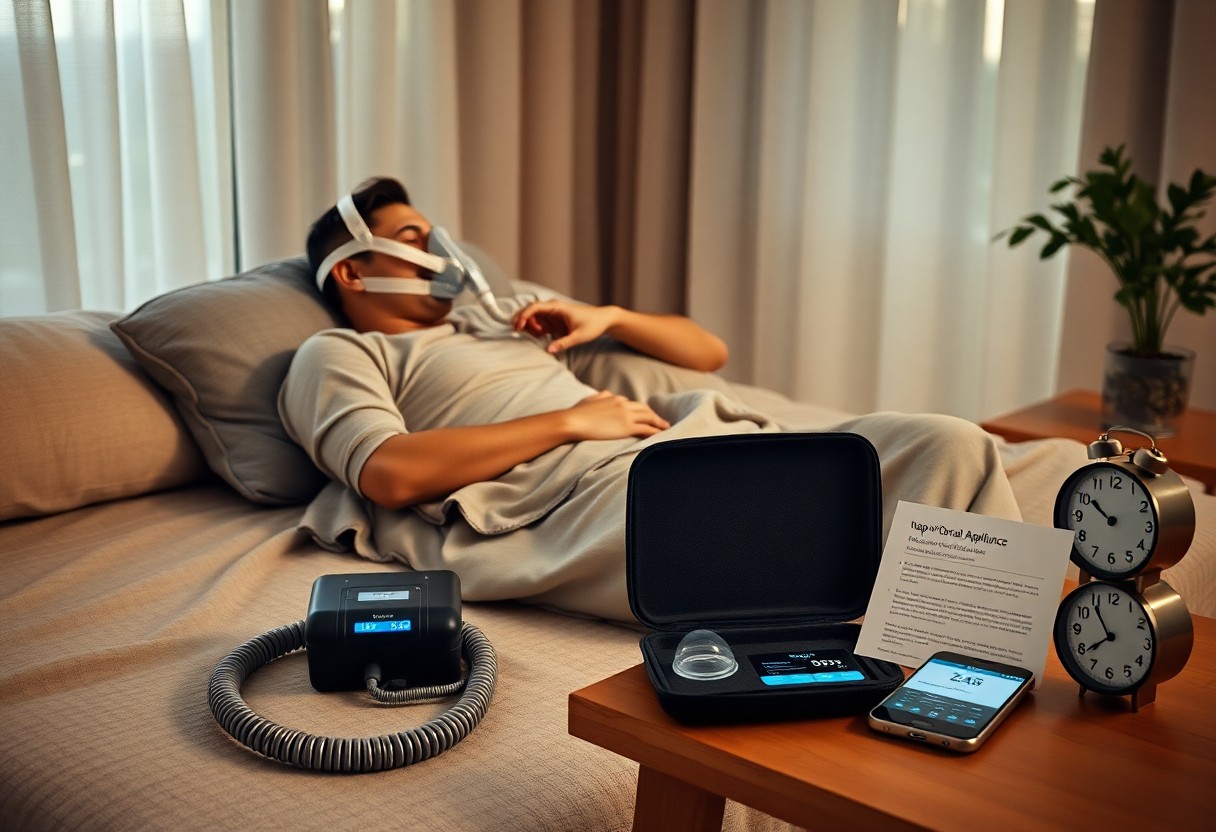
Benefits of Oral Appliances for Napping
For short daytime rest, oral appliances (mandibular advancement devices) provide a compact, mask-free alternative to CPAP by advancing your jaw and opening the airway-well suited for 20-30 minute naps. Studies report AHI reductions of roughly 30-60% in responsive patients with mild-to-moderate OSA, and the portability makes on-the-go naps far more practical than hauling CPAP gear.
Ease of Use
You can slip a fitted oral appliance into a small case, insert it in under a minute, and nap without tubing or a power source-ideal for office breaks or travel. Many people adapt faster than with CPAP; you avoid mask leaks, skin irritation, and machine noise. Bring a hygiene case and quick-clean tools to prevent bacterial buildup between naps.
Improved Sleep Quality
By holding your lower jaw forward, the appliance reduces collapses and arousals during short naps, often improving sleep continuity and next-up alertness; responders typically report fewer micro-awakenings and reduced daytime sleepiness. However, if you have severe OSA or frequent desaturations, CPAP is more effective-confirm with your clinician before relying solely on an appliance for naps.
Maximizing improvement requires a custom, titratable device set to about 50-75% of your maximum comfortable protrusion, which balances airway opening with jaw comfort. Clinical series show responders achieving AHI drops of ~40-60% and mean SpO2 increases of 1-3 percentage points during sleep; track any tooth movement or TMJ pain and schedule follow-up adjustments with your dental sleep specialist to maintain effectiveness for naps.
Factors Affecting Nap Quality
You can optimize short naps by controlling the common variables that fragment rest:
- CPAP: pressure, mask seal, humidifier settings
- oral appliance: fit, advancement, jaw comfort
- nap length: aim 20-30 minutes to avoid sleep inertia
- environment: light, noise <40 dB, temperature 18-20°C
- stimulants: avoid caffeine 4-6 hours before
Perceiving how these factors interact lets you make targeted tweaks-mask changes, pillow swaps, or timing adjustments-that noticeably improve nap recovery.
Stress and Relaxation Techniques
You lower pre‑nap arousal with brief, repeatable routines: try 4‑7‑8 breathing for 2-3 minutes, a 5‑minute progressive muscle relaxation from toes to jaw, or a 1-2 minute guided imagery clip. Practicing the same sequence before each nap reduces sleep latency; clinical protocols show relaxation techniques can cut time to sleep by roughly one‑third. Use these steps right before donning your CPAP or oral appliance to maximize the effect.
Physical Comfort
Your position, bedding, and device fit determine whether you get restorative micro‑sleep: favor lateral or semi‑recumbent postures, set room temps to 18-20°C, and use a low‑profile travel pillow for head alignment. Side‑sleeping often reduces apneas compared with supine, and ensuring your mask has no leaks >10 L/min prevents fragmentation of short naps.
To refine comfort, adjust mask straps to eliminate gaps without overtightening, try foam or gel cushions to cut pressure points, and consider a small wedge (15-30°) if reflux or nasal congestion wakes you. If you use an oral appliance, check that advancement feels stable for 20-30 minute rests; if jaw soreness appears, see your dental sleep specialist for incremental titration to maintain both comfort and efficacy.
Incorporating Naps into Your Routine
When you schedule naps, treat them like mini sleep sessions: aim for 20-30 minute naps during a natural dip (midafternoon) to boost alertness without fragmenting night sleep; evidence shows short naps can improve cognitive performance by about 34%. If you have questions about timing or effects on your therapy, read How Napping Could be Hindering Your Sleep Apnea ….
Frequency and Duration
You should limit naps to one daily session or at most two brief naps, keeping each to 10-30 minutes; more than 60 minutes often increases sleep inertia and can worsen nighttime sleep efficiency. For example, shift workers benefit from a single 20-minute nap before a night shift to preserve alertness without extending daytime sleep.
Listening to Your Body
Pay attention to sleepiness cues: if you fall asleep within 5 minutes or need multiple naps daily, that signals significant sleep debt or inadequate treatment, and you should consult your provider about CPAP settings or oral appliance fit.
Track naps with a simple diary or an app noting start time, duration, CPAP use, mask leaks, and post-nap grogginess; an Epworth Sleepiness Scale score >10 or consistent sleep latency under 15 minutes indicates you may need a therapy adjustment or medical review to reduce daytime hypoxia and improve overall recovery.
Final Words
Hence you can improve nap quality by using a properly fitted CPAP or custom oral appliance, keeping humidification and mask comfort optimized, adopting a semi-upright position, and limiting naps to 20-30 minutes to prevent grogginess. Regular device maintenance and follow-up with your sleep specialist help tailor pressure or appliance fit, so your naps support daytime recovery and alertness.
FAQ
Q: How can I prepare my CPAP for a short, restorative nap?
A: Choose a low‑profile mask (nasal pillow or minimal‑contact nasal mask) for quick comfort and a secure seal. Use the ramp or comfort start so pressure rises gradually; if you have APAP it will adjust automatically for short naps. Turn on a low humidifier setting or pre‑warm the humidifier to reduce dryness. Secure the tubing with a clip or short hose to prevent tugging while you change position. Aim for a 20-90 minute nap depending on goals (20-30 minutes for a power nap, 60-90 minutes to complete a sleep cycle) and set an alarm so naps don’t interfere with nighttime sleep. Keep the mask, cushions and filters clean and charged spare batteries or a travel battery if napping away from home. Contact your sleep clinician before changing prescribed pressure settings.
Q: What steps make an oral appliance comfortable and effective for napping?
A: Wear the same custom or professionally fitted oral appliance you use at night; clean it before use and store it in its ventilated case between naps. Allow a few minutes for the appliance to seat properly and for saliva to adjust before lying down. Nap on your side or with your head slightly elevated to support airway patency. If you feel jaw pain, tooth pressure, or altered bite, stop using the device and contact your dentist-do not self‑adjust the appliance. For short daytime naps keep sessions brief (20-60 minutes) to reduce jaw fatigue; longer naps should follow a recent professional assessment. Bring a small travel toothbrush and rinse after napping to reduce bacterial buildup.
Q: What safety, timing and troubleshooting tips help when napping with CPAP or an oral appliance?
A: Safety: never nap in situations where sudden sleep could be hazardous (driving, operating machinery) and avoid alcohol or sedatives before napping. Schedule naps earlier in the day (midday to early afternoon) and limit duration to prevent disrupting nighttime sleep. Troubleshooting: persistent mask leaks-try a different cushion size, a nasal pillow, or a chin strap for mouth leak; dryness or congestion-increase humidity, use a heated hose, or saline nasal spray; pressure discomfort-use the ramp or short breaks and consult your provider if it continues; oral appliance discomfort-stop use if you have new jaw or dental pain and see your dentist. If daytime sleepiness persists despite compliant use, keep a sleep log and contact your sleep specialist to reassess therapy and daytime sleepiness scales.
