
Why Mouth Breathing Ruins Your Power Naps
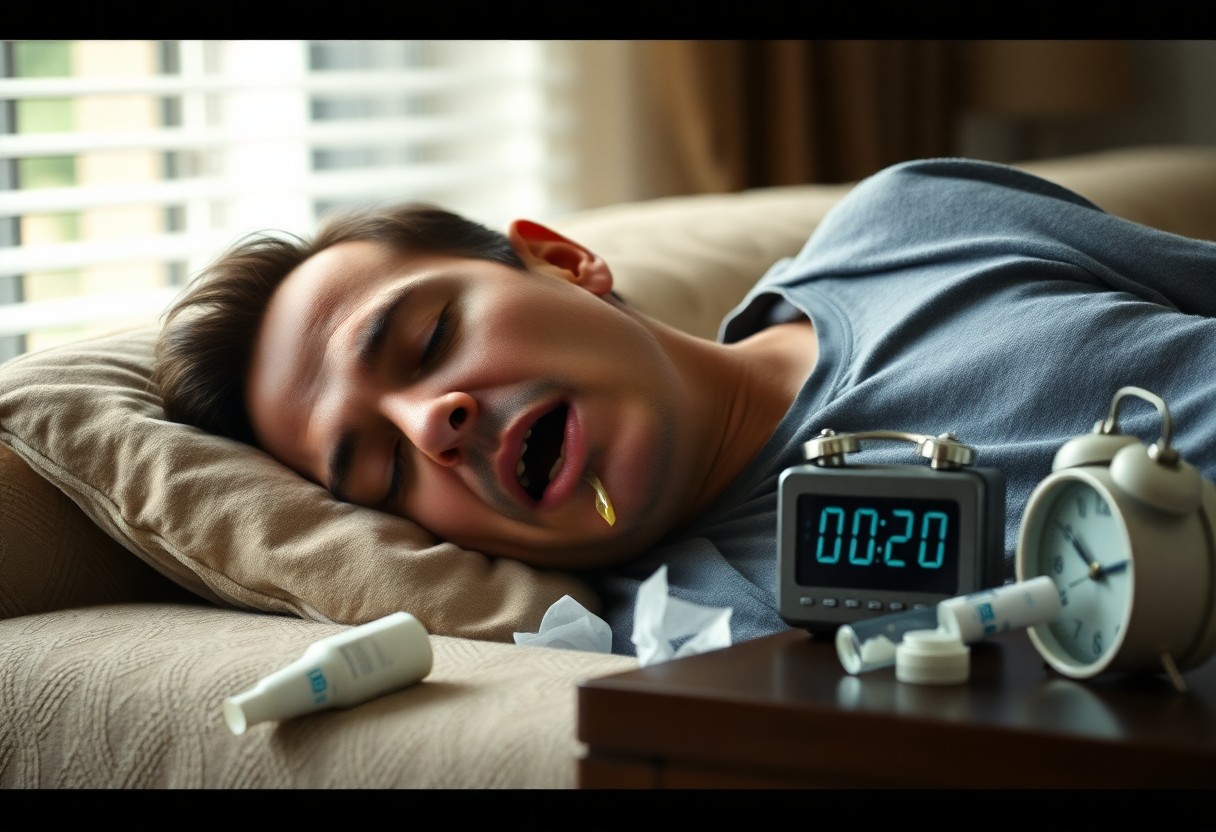
There’s a physiological reason mouth breathing wrecks short naps: when you breathe through your mouth you get reduced oxygen exchange, increased airway dryness and fragmented sleep, leaving you less refreshed. You also risk heightened inflammation; learn more at How mouth breathing during sleep can be dangerous to your health. Using nasal strips restores nasal airflow and improves nap quality, so you wake more alert.
Key Takeaways:
- Mouth breathing bypasses nasal filtration, humidification, and nitric oxide delivery, lowering effective oxygen uptake and promoting shallow, fragmented naps.
- Breathing through the mouth increases oral and airway dryness, irritates the throat, raises micro‑awakenings and sleep fragmentation, and reduces nap restorative quality.
- Nasal dilator strips reduce nasal resistance and promote nasal breathing, which can improve airflow, maintain humidity and nitric oxide-mediated oxygenation, and help restore nap depth and continuity.
Nasal breathing: physiology that supports naps
When you breathe through your nose during a nap you get nitric oxide production, filtration, and humidification that preserve mucosal health and improve gas exchange, which lowers arousal risk and raises sleep depth. Nasal breathing also maintains a better CO2/O2 balance for cortical perfusion; see practical evidence in 10 Major Reasons Why Mouth Breathing is Bad for You.
Nitric oxide, filtration and humidification
Your nasal passages generate nitric oxide (measured in parts per billion), warm and humidify air, and trap particulates before they reach the lungs. That NO acts as a local vasodilator and antimicrobial agent, enhancing alveolar oxygen uptake and lowering infection risk; without it, you face drier air, higher pathogen load, and weaker oxygen transfer during short sleep bouts.
Efficient ventilation and CO2/O2 balance
Nasal breathing increases airway resistance just enough to slow your rate and deepen each breath, preserving end‑tidal CO2 near the physiological range (~38-42 mmHg). Because cerebral blood flow falls roughly 3% per 1 mmHg drop in PaCO2, avoiding hypocapnia during naps helps sustain cortical perfusion and sleep continuity; mouth breathing tends to overventilate and fragment naps.
In practice, when you shift from mouth to nasal breathing your tidal volume typically rises while respiratory rate falls, which raises end‑tidal CO2 and improves O2 unloading via the Bohr effect-meaning better tissue oxygenation at similar arterial O2. Devices like nasal strips can reduce nasal resistance and increase nasal airflow by roughly 20-30% in responsive users, making it easier for you to preserve optimal CO2/O2 balance and get deeper, less interrupted naps.
What changes with mouth breathing
Reduced nitric oxide and impaired gas exchange
Nasal nitric oxide, produced in your paranasal sinuses at concentrations often hundreds of parts per billion, normally helps dilate pulmonary vessels and improve ventilation-perfusion matching; when you breathe through your mouth you bypass that source and lose those local benefits. That leads to less efficient gas exchange and can produce measurable drops in arterial oxygenation during short naps, along with higher airway resistance and poorer nap recovery.
Increased dead space and altered breathing pattern
An adult’s anatomical dead space is about 150 mL; with a typical tidal volume near 500 mL you get ~350 mL of alveolar ventilation per breath. If mouth breathing drives shallower 300 mL breaths, your per‑breath alveolar ventilation falls to ~150 mL-a >50% functional loss-forcing faster, less efficient breathing that increases CO₂ swings and fragments sleep.
That shallow, rapid pattern raises inspiratory work, causes oral dryness that triggers micro‑arousals, and elevates sympathetic tone, all of which cut into restorative slow‑wave and REM fractions on polysomnography. Using nasal dilators or strips can lower nasal resistance, help you regain deeper tidal volumes, reduce CO₂ variability, and restore the deeper, more restorative naps you need.
Dryness and mucosal damage
During a 10-30 minute power nap, mouth breathing rapidly strips humidity from your oral and pharyngeal surfaces, leading to mucosal microtears and compromised barrier function. You’ll notice reduced comfort and faster inflammation onset; in contrast, studies show external nasal dilator strips can lower nasal resistance by roughly 20-30%, encouraging nasal breathing and protecting the mucosa during short naps.
Oral and pharyngeal drying-comfort and inflammation
When you breathe through your mouth, saliva’s protective enzymes (lysozyme, IgA) are less effective and the pharyngeal mucosa dries, which increases friction and sensory irritation. Clinical observations link this pattern to accelerated inflammation and dentogingival discomfort within minutes; using a nasal strip often restores nasal airflow, reduces mouth opening, and lessens immediate dryness and inflammatory signaling.
Higher risk of irritation and post-nap symptoms
You’re likelier to wake from a nap with sore throat, hoarseness, cough, or nasal congestion if you breathed by mouth; habitual mouth breathers commonly report these post-nap symptoms even after 10-20 minutes of sleep. Improving nasal patency with a strip reduces mouth breathing frequency and the incidence of these uncomfortable aftereffects.
Mechanistically, dry mucosa impairs mucociliary clearance and raises local bacterial load, so you not only feel irritated but face an increased infection risk over time; case series in sleep clinics note persistent throat symptoms in patients who habitually mouth-breathe. By promoting nasal breathing during naps, nasal strips help preserve mucosal hydration, maintain mucociliary function, and cut down on both immediate irritation and downstream respiratory complaints.

Fragmented sleep and reduced nap restorative value
You breathe through your mouth during naps, increasing micro-arousals, dryness, and nasal bypass that shortens slow-wave and REM stages; this fragmentation cuts into the nap’s restorative yield. Studies show mouth breathing shifts sleep toward lighter stages and, in some trials, reduces deep-sleep time by up to 20-40%. Applying a nasal strip that boosts nasal airflow by 20-30% often preserves deeper stages and restores more of the nap’s recovery benefit.
Micro-arousals, snoring, and lighter sleep stages
When you mouth-breathe you provoke snoring and vibration that trigger brief arousals and stall progression into deep sleep; those micro-arousals-seconds long but frequent-reset sleep staging and leave you in lighter N1-N2 more often. Polysomnography shows increased arousal indices and snore power with oral breathing; using nasal strips reduces snoring intensity in many subjects, lowering arousals and helping you reach more restorative stages.
Cognitive and performance consequences after napping
If your nap is fragmented by mouth breathing you wake with less benefit: slower reaction times, impaired short-term memory consolidation, and reduced vigilance. Controlled naps show that fragmented sleep can erode the usual post-nap gains in attention and learning by roughly 20-30%, making you feel groggy instead of sharper. Preventing oral breathing preserves the cognitive lift you expect from a power nap.
Physiologically, nasal breathing raises nasal nitric oxide and improves oxygen exchange, so when you avoid mouth breathing your blood oxygen and cerebral perfusion stay steadier during naps. That stability is what enables memory consolidation and faster reaction-time gains; experiments link uninterrupted naps to significant improvements in tasks like word-pair recall and psychomotor vigilance, often yielding up to 20-30% better performance compared with fragmented naps-so devices that keep your airway nasal can directly affect how rested and sharp you feel.
Common causes that promote mouth breathing
Nasal congestion, allergies, and rhinitis
When your nose is blocked by a cold, allergic rhinitis, or chronic inflammation, you instinctively switch to oral breathing, which lowers nasal filtration and humidification and raises the chance of dry mouth and fragmented naps. Allergic rhinitis affects roughly 10-30% of adults worldwide, and seasonal flare‑ups often worsen nap quality by increasing airway resistance and reducing comfortable oxygen flow through your nose.
- Nasal congestion from colds or sinusitis forces oral breathing
- Allergies trigger inflammation that narrows nasal passages
- Assume that rhinitis flare‑ups make you more likely to mouth‑breathe during naps
Anatomical factors and sleep-disordered breathing
Structural issues such as a deviated septum, collapsed nasal valve, or enlarged turbinates raise nasal resistance so much that you default to mouth breathing; in parallel, obstructive sleep apnea (affecting an estimated 9-38% of adults) drives oral breathing and oxygen desaturation even during short naps. These anatomical problems blunt the benefits of nasal inhalation and increase your risk of noisy, less restorative naps.
- Deviated septum and nasal valve collapse limit airflow
- Obstructive sleep apnea promotes mouth breathing and drops oxygen saturation
- Assume that enlarged turbinates or adenoids in kids will push them to breathe through the mouth
You’ll see measurable improvements when anatomical causes are addressed: up to 80% of adults show some septal deviation on imaging, and surgical correction or targeted management often reduces mouth breathing and daytime sleepiness; nasal dilators or strips can increase nasal patency enough to improve airflow during naps but won’t correct major obstructions.
- Septal deviation is common and often reduces nasal efficiency
- Surgical correction (e.g., septoplasty) frequently lowers mouth breathing and sleep symptoms
- Assume that nasal strips can aid temporary nasal opening yet won’t replace definitive structural treatment
Nasal strips and other interventions
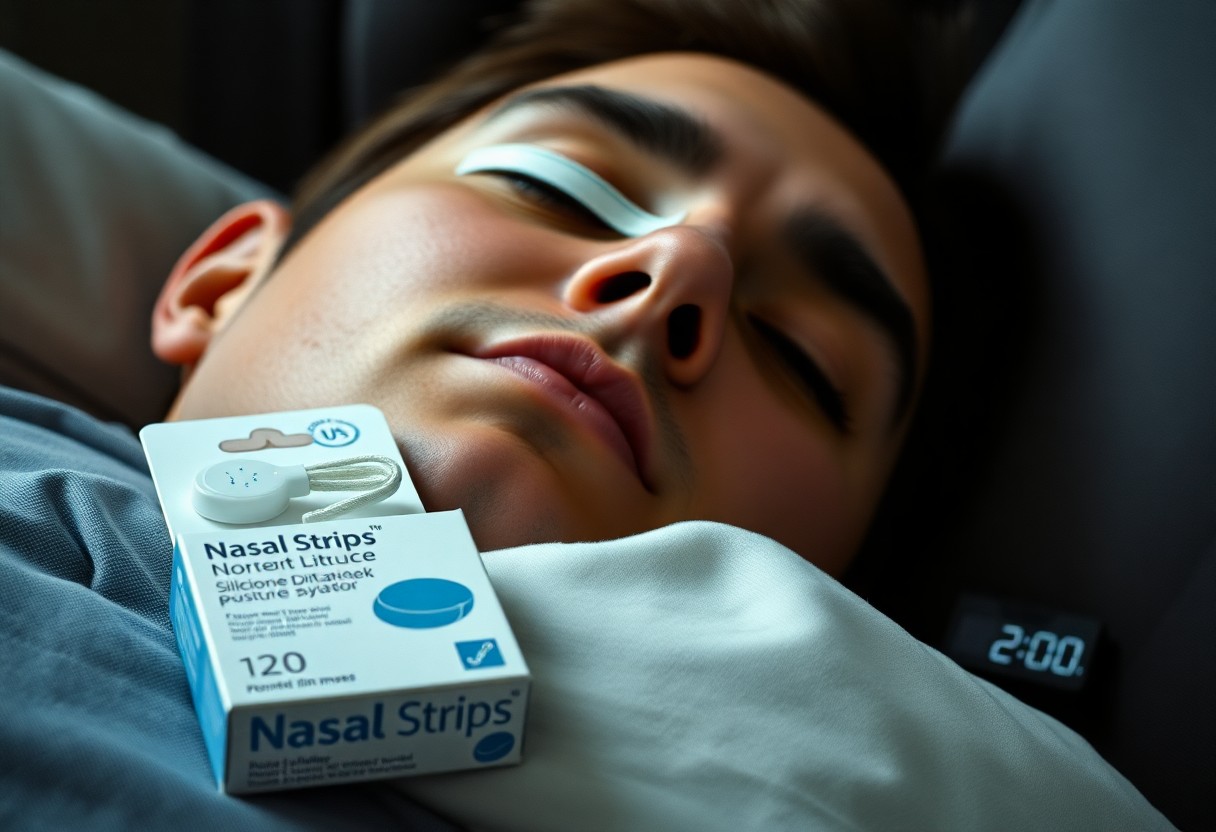
You can often reduce mouth breathing during naps with simple, noninvasive fixes: external nasal strips, internal nasal dilators, and positional or chin-support strategies. External strips adhere to the bridge and lift the nasal valve, while internal dilators expand the nostril lumen from inside; both aim to lower resistance, cut down on dry-mouth episodes, and help you maintain nasal breathing during a short sleep window.
How nasal dilators improve airflow and oxygenation
Nasal dilators work by enlarging the narrow nasal valve area and reducing resistance, which studies and device measurements show can increase nasal airflow by up to ~15-25% and peak nasal inspiratory flow (PNIF) similarly. That improved flow often yields a small but measurable rise in oxygen saturation (typically ~0.5-1%) and fewer arousals from desiccation-so you’ll inhale more humidified, filtered air and reduce mouth dryness during naps.
Evidence, limitations, and practical use for naps
Small randomized and crossover studies (n≈20-50) report subjective improvements in snoring, perceived sleep quality, and reduced mouth breathing with nasal strips or dilators, but objective benefits for sleep architecture are mixed. For quick naps you’ll likely feel benefit: strips act immediately, last ~8-12 hours, and internal dilators are reusable-yet they do not treat obstructive apneas and offer modest oxygen gains at best.
In practice, you should apply an external strip or insert a dilator just before lying down; combining a nasal device with a gentle chin support can further limit mouth opening and dry mouth during a 20-90 minute nap. Controlled trials versus placebo strips show the strongest effects on subjective measures (less dry mouth, fewer awakenings) rather than large SpO2 changes. If you have chronic nasal congestion from allergies, topical intranasal steroids or a saline rinse taken 15-30 minutes before your nap can improve dilator effectiveness. If you experience loud gasping, daytime sleepiness, or witnessed apneas, nasal interventions aren’t a substitute for diagnostic sleep testing or CPAP; they’re an adjunct for improving comfort and preserving nasal breathing during short naps.
Conclusion
Summing up, when you breathe through your mouth you lower nasal filtration and nitric oxide delivery, disrupt oxygen uptake, and increase airway dryness, which shortens and fragments naps; using nasal dilators or nose strips restores nasal airflow, improves oxygenation and moistens the airway, letting you get deeper, more restorative power naps – see evidence at Mouth Breathing Face: How to Fix and Sleep Effects.
FAQ
Q: Why does mouth breathing reduce the quality of power naps?
A: Mouth breathing bypasses the nose’s protective and regulatory functions-warming, humidifying and filtering inhaled air and producing nitric oxide (NO). Nasal NO improves pulmonary blood flow and oxygen uptake; when you breathe through the mouth, NO production is lost and oxygen delivery to tissues can be less efficient. Mouth breathing also dries and irritates the upper airway, increases snoring and airway resistance fluctuations, and raises sympathetic nervous activity, all of which fragment short sleep episodes. For a power nap (often 10-30 minutes) these effects delay sleep onset, reduce the chance of reaching restorative sleep stages, and shorten the net restorative benefit.
Q: How does mouth breathing change oxygen and carbon dioxide dynamics during a nap?
A: Nasal breathing promotes slower, more stable airflow and maintains slightly higher CO2 levels that support cerebral blood flow and efficient oxygen unloading at tissues. Mouth breathing tends to increase variability in tidal volume and can encourage faster, shallower breaths that alter CO2 levels and reduce cerebral perfusion. Loss of nasal NO further limits efficient gas exchange in the lungs. The combined effect is lower sleep-stage stability and reduced tissue oxygen delivery during short naps, which blunts recovery effects such as reduced sleepiness and improved cognitive performance after waking.
Q: Do nasal strips help prevent mouth breathing and improve nap quality, and how should they be used?
A: Nasal dilator strips mechanically widen the external nasal valve, lowering nasal resistance and making nasal breathing easier without medication. By promoting nasal airflow they help preserve humidification and NO production, reduce snoring and upper-airway vibration, and decrease the tendency to switch to mouth breathing during brief sleep. Many users report improved oxygen saturation and fewer awakenings when nasal airflow is increased. Use them on clean, dry skin across the nasal bridge before lying down; they work best if nasal passages are not severely congested or structurally blocked. If congestion or anatomical obstruction prevents nasal breathing, saline rinses, topical decongestants (short-term), or medical assessment may be needed for consistent improvement.
