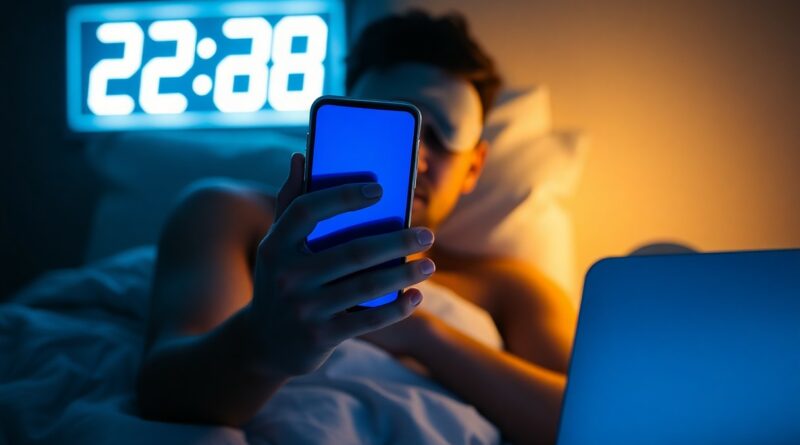
How Screen Time Affects Your Sleep More Than You Think
It’s blue light, overstimulation, scrolling habits, and digital stress that push your bedtime later and reduce rest; these factors delay sleep onset and produce lower sleep quality. See Screen Use Disrupts Precious Sleep Time for details.
Key Takeaways:
- Blue light from screens suppresses melatonin and shifts circadian timing, often delaying sleep onset by 30-60+ minutes.
- Late-night scrolling and engaging content increase cognitive and emotional arousal, making it harder to fall asleep and reducing deep and REM sleep.
- Frequent night checks and notifications fragment sleep architecture, lower sleep efficiency, and cause daytime sleepiness.
- Digital stress from work messages, negative news, or social comparison raises arousal and cortisol, prolonging sleep latency and worsening sleep quality.
- Practical steps like a screen curfew, Do Not Disturb, blue-light filters, and a device-free wind-down routine improve sleep timing and restorative sleep.
The Biological Impact of Blue Light
Blue light exposure is a primary factor in suppressing melatonin production, which directly interferes with your body’s natural sleep-wake cycle.
Suppression of Melatonin Secretion
You notice sleep onset delays because blue light exposure is a primary factor in suppressing melatonin production, reducing your ability to fall asleep and lowering overall sleep quality.
Disruption of the Circadian Rhythm
Even modest evening screen time shifts your circadian rhythm, since blue light exposure is a primary factor in suppressing melatonin production, directly disrupting your natural sleep-wake cycle.
Nighttime screen use prolongs wakefulness: blue light exposure is a primary factor in suppressing melatonin production, so your circadian rhythm moves later, you fall asleep later, experience lighter sleep, and often wake feeling groggy unless you adjust screen habits.
Cognitive Overstimulation and Mental Alertness
Engaging with digital content causes overstimulation, keeping the brain in a high state of alertness that prevents the transition to deep rest. You then struggle to enter restorative sleep cycles, waking more often and feeling less refreshed.
Active Brain Engagement vs. Passive Relaxation
You interact, reply, and scroll, and that active engagement keeps neural circuits firing; engaging with digital content causes overstimulation and keeps your brain alert, so passive relaxation before bed rarely takes hold.
The Physiological Barrier to Winding Down
Screens emit stimuli that prolong physiological arousal: engaging with digital content causes overstimulation, keeping your sympathetic nervous system active and making the switch to parasympathetic rest slower, so your body resists winding down for true sleep.
Your body shows measurable signs: engaging with digital content causes overstimulation that elevates heart rate, raises cortisol and delays melatonin release, keeping your brain in a high state of alertness long after the screen is off, so quiet rest often fails to trigger deep sleep stages and recovery.
The Behavioral Trap of Scrolling Habits
Your last-hour scrolling trains your attention and eats minutes into sleep time. Modern scrolling habits create a psychological loop that significantly contributes to delayed sleep onset and time displacement, so you fall asleep later and lose restorative sleep.
The Infinite Scroll and Dopamine Responses
Apps’ infinite scroll gives you unpredictable dopamine rewards, strengthening the psychological loop that extends your evening and deepens delayed sleep onset and time displacement, making it harder for you to stop at your planned bedtime.
Habitual Patterns and Bedtime Procrastination
Nightly, you pick up your device out of habit, and the psychological loop of scrolling creates subtle time displacement that becomes bedtime procrastination, robbing you of sleep and increasing delayed sleep onset.
When you repeatedly postpone lights-out to continue scrolling, the pattern becomes automatic: Modern scrolling habits create a psychological loop that significantly contributes to delayed sleep onset and time displacement, so habitual bedtime procrastination shortens your total sleep opportunity, fragments recovery, and lowers daytime performance.
Digital Stress and Emotional Regulation
Exposure to digital stress through social media or news increases physiological tension, leading to lower sleep quality, so you enter sleep with higher arousal and more fragmented deep-sleep periods.
Cortisol Spikes and Information Overload
Cortisol spikes from information overload keep you alert; when you scroll headlines before bed, cortisol elevation shortens REM and delays sleep onset, reducing overall restorative sleep.
The Impact of Connectivity Anxiety on Rest
Connectivity anxiety makes you check devices repeatedly, fragmenting your wind-down routine; exposure to digital stress through social media or news reduces sleep efficiency and increases nighttime awakenings.
Repeatedly engaging with feeds triggers anticipatory stress and heightened sympathetic activity, so you experience faster heart rate and less slow-wave sleep. You may notice fragmented sleep architecture and morning fatigue because exposure to digital stress through social media or news increases physiological tension, leading to lower sleep quality, reinforcing a cycle of night-time checking and poorer daytime functioning.
Compounding Factors in Sleep Degradation
The synergy between blue light and digital stress results in both delayed sleep onset and a measurable decrease in overall sleep quality.
- blue light
- digital stress
- delayed sleep onset
After you read the Impact of Excessive Screen Time on Sleep Quality and … – PMC, limit evening exposure.
Fragmented Sleep Architecture
Fragmented sleep architecture makes you wake frequently, shortening continuous REM and slow-wave sleep, and worsening the measurable decrease in overall sleep quality linked to blue light and digital stress.
Reduced Efficiency of Restorative Sleep Phases
Reduced efficiency of restorative sleep phases causes you to lose deep sleep time each night, undermining recovery and diminishing cognitive and physical restoration tied to blue light and digital stress.
You can expect the synergy between blue light and digital stress to produce both delayed sleep onset and a measurable decrease in overall sleep quality, cutting deep sleep and shortening REM cycles so you feel less restored and perform worse the next day.
To wrap up
To wrap up, blue light from screens, cognitive overstimulation, habitual scrolling, and mounting digital stress collectively delay your sleep onset and degrade sleep quality, leaving you with fragmented, less restorative rest.
FAQ
Q: How does blue light from screens interfere with my sleep?
A: Blue light from screens activates intrinsically photosensitive retinal ganglion cells that suppress melatonin production and shift circadian timing. Reduced melatonin makes it harder to fall asleep and can delay your internal clock, producing later sleep onset and daytime sleepiness. Intensity, wavelength (around 460 nm), screen proximity, and timing matter most; exposure within one to two hours before bedtime has the strongest effect. Long-term evening exposure can gradually shift sleep timing and reduce overall sleep quality.
Q: Can late-night scrolling or binge-watching actually keep me awake?
A: Yes. Engaging, novel, or emotionally charged content raises physiological and cognitive arousal-higher heart rate, increased alertness, and persistent mental engagement-that delays sleep onset. Infinite scroll and autoplay features extend sessions and promote bedtime procrastination, so time spent can exceed intentions. Habitual late-night use also conditions the brain to associate bedtime with stimulation rather than rest, making it harder to wind down over time.
Q: How do notifications and digital stress affect sleep quality?
A: Nighttime notifications and the expectation of urgent messages produce anticipatory stress and hypervigilance, increasing cortisol and fragmenting sleep through awakenings or micro-arousals. Work-related alerts and rumination about messages or tasks make it harder to fall back asleep after disturbances and reduce deep and REM sleep, which lowers restorative sleep quality. Persistent digital stress also worsens sleep continuity across nights, amplifying daytime fatigue and mood symptoms.
Q: Will night mode, blue-light filters, or blue-blocking glasses fix the problem?
A: Filters and blue-blocking glasses reduce short-wavelength light and can lessen melatonin suppression, but they do not eliminate the problem. Screen brightness, viewing distance, total exposure time, and stimulating content still affect arousal and circadian timing. Combining spectral filtering with reduced evening screen time, lower brightness, and behavior changes yields much better results than relying on filters alone.
Q: What practical steps can I take to protect my sleep from screens?
A: Set a digital curfew of 30-120 minutes before bedtime depending on sensitivity and the type of content, and use Do Not Disturb or silence notifications overnight. Create a bedroom-first policy by removing devices or charging them outside the room to reduce temptation and interruptions. Dim ambient lights in the evening, lower screen brightness, enable night modes as a supplemental measure, and favor low-stimulation activities (reading a paper book, gentle stretching, or breathing exercises) before bed. Maintain a consistent sleep schedule, pause work-related communications at a set time, and consider blue-blocking glasses if evening screen use is unavoidable.
