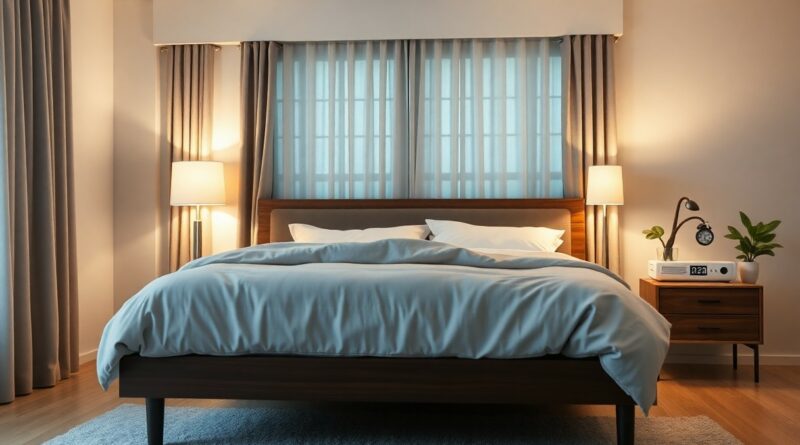
How to Create the Perfect Bedroom for Deep Sleep
Many readers seeking rest need a practical overview of sleep environment design aimed at achieving better nightly rest; you will learn to eliminate dangerous sleep disruptors and create a restorative bedroom.
Key Takeaways:
- Choose a mattress and pillows that match your sleep position and firmness preference; use trial periods to confirm pressure relief and spinal alignment.
- Keep bedroom temperature between 60-67°F (15-19°C) and opt for breathable bedding to help regulate body heat through the night.
- Install blackout curtains or shades and remove electronic light sources; use warm, dimmable lighting for pre-sleep routines.
- Control noise with white-noise machines, thick curtains, rugs, and sealed windows/doors to minimize sudden disturbances.
- Declutter surfaces, store devices outside the bedroom or in closed drawers, and arrange furniture for a calm, sleep-focused layout.
Prioritizing Mattress Comfort for Physical Support
You should prioritize mattress comfort: Mattress comfort is a foundational factor in engineering a bedroom for deep and restorative sleep. Check How to Compose a Room for Deep Sleep for layout guidance. Assume that a supportive mattress reduces nightly tossing and improves spinal alignment.
- mattress comfort
- support
- firmness
How to select the ideal firmness for your body type
Match firmness to your body: side sleepers often need medium-soft for hip and shoulder relief, back sleepers prefer medium-firm, and stomach sleepers benefit from a firmer core. Test in-store for 20-30 minutes and use brands offering 30-night trials so you can confirm spinal alignment and personal comfort.
Tips for choosing supportive and ergonomic materials
Choose materials that balance contouring with support: natural latex and pocketed coils offer responsiveness, while memory foam eases pressure-prioritize breathable covers and cooling layers to prevent heat retention.
Compare layer construction, foam density, coil count, and cover breathability when evaluating ergonomics; you should prioritize pressure relief, temperature control, and edge support. Assume that combining memory foam or latex with pocketed coils and a breathable cover yields balanced, long-lasting support for deep, restorative sleep.
- memory foam
- latex
- pocketed coils
- hybrid
- density
Regulating Room Temperature for Thermal Balance
Maintaining an optimal room temperature is a practical necessity for preventing sleep disruptions. You should set your bedroom between 60-67°F (15-19°C) to support deep sleep and reduce awakenings.
Temperature Overview
| Focus | Recommendation |
|---|---|
| Range | 60-67°F (15-19°C) |
| Why | Reduces night wakings and supports REM/NREM cycles |
How to identify the best temperature range for sleep
Aim for 60-67°F (15-19°C)
Identification Steps Check window placement, HVAC settings, and fan use to balance fresh air and noise. Knowing how each element alters drafts helps you avoid sleep disruptions. Monitor door gaps, window seals, HVAC filter condition, fan direction, and furniture blocking vents to maintain steady airflow; clogged filters and poor seals increase awakenings. Schedule HVAC service every 12 months and check filters monthly for consistent performance. Knowing which fixes reduce drafts fastest lets you preserve the 60-67°F (15-19°C) zone for deeper sleep. Blackout curtains are necessary tools for managing light factors and promoting melatonin production. You should choose opaque, triple-weave fabrics and mount them flush to the window to block streetlight and early sunrise. Recognizing how these choices affect sleep quality helps you achieve deeper rest. Measure the window and add at least 10 cm overlap on all sides, then mount the rod outside the frame to minimize light leaks. Hang heavy, opaque panels because blackout curtains are necessary tools for managing light factors and promoting melatonin production. Turn off devices and cover LEDs with dark tape, use smart plugs to schedule power-downs, and move chargers out of sight to reduce glow; set screens to true-black night mode and dim ambient lights for less disturbance. Address hidden light by inspecting outlets, alarm clocks, chargers, smoke detectors, and cable boxes; cover bright diodes with dark electrical tape and use outlet extenders to reposition glowing devices away from your bed. Use app timers and smart plugs to fully power down gear at bedtime. Blackout curtains are necessary tools for managing light factors and promoting melatonin production. Recognizing even tiny glows can cut sleep disruptions significantly. You can design for rest: Sound control is a key design element used to minimize environmental noise and improve sleep quality. Use a steady white noise machine or app to mask traffic and neighbors and reduce sudden sounds. Knowing you can fine-tune volume to preserve sleep quality. Consider sealing gaps, adding heavy curtains, and installing a door sweep to reduce airborne and impact noise. Knowing Sound control is a key design element used to minimize environmental noise and improve sleep quality. Install resilient channels, dense drywall, and acoustic sealant to increase wall mass and reduce transmission; use double-glazed windows, thick rugs, and bookshelf-lined walls to absorb reflections and lower reverberation. Knowing Sound control is a key design element used to minimize environmental noise and improve sleep quality. Clutter reduction is a practical step in sleep environment design that helps lower stress before bed. You should clear bedside surfaces, stash laundry, and tuck cables away to calm your mind and prepare for deep sleep. Use clear storage, drawer dividers, and cord channels so you remove competing items from sight. Any nightly habit of returning items to their home and clearing the nightstand reduces pre-sleep tension and helps you sustain calm. Keep decor to two calming pieces, schedule a 10-minute weekly reset, and store extras out of sight so you avoid buildup. Any consistent practice centered on clutter reduction lowers pre-bed stress and helps you sleep deeper. Schedule brief nightly clears and a monthly donate box to reduce decision load and maintain clear surfaces. Any 10-minute weekly reset plus removing one item per day reinforces minimalist habits and supports clutter reduction to lower your stress before bed. Summing up you should optimize five sleep factors: mattress comfort, room temperature (cool), blackout curtains, sound control, and clutter reduction to improve nightly rest; follow 9 Tips for Creating a Sleep Conducive Bedroom for a Good Night’s Sleep for practical steps. A: A mattress that matches your primary sleep position and supports neutral spinal alignment helps you fall and stay asleep. Side sleepers often prefer a softer surface with pressure relief in the hips and shoulders, while back and stomach sleepers typically need medium to firm support to prevent sagging. Choose memory foam or hybrid models if you want contouring plus support; latex offers responsive support and cooling. Test mattresses with a trial period, check return policies, and replace a mattress showing persistent sag, lumps, or loss of comfort (commonly every 7-10 years). A: A bedroom temperature around 60-67°F (15-19°C) suits many adults for deep sleep. Use breathable bedding made from cotton, linen, or moisture-wicking performance blends to reduce nighttime overheating. Layer blankets so you can add or remove covers without disrupting sleep, and consider a cooling mattress topper or breathable pillow if you run hot. Keep indoor humidity near 40-60% with a humidifier or dehumidifier as needed, and use a fan or AC to maintain steady airflow. A: Blackout curtains or heavy roller shades block streetlights and early morning sun, supporting natural melatonin release. Mount curtains wide and high so they wrap around the window and overlap at the center; use blackout liners or adhesive blackout film for stubborn gaps. Dim overhead lights and switch to warm, low-intensity bulbs in the hour before bed to signal sleepiness. Cover or tape bright LEDs on chargers and devices, and use a comfortable sleep mask for travel or imperfect windows. A: Soft furnishings such as rugs, heavy curtains, upholstered headboards and bookshelves absorb and diffuse sound. Use a white noise machine, fan, or app to mask intermittent noises that disrupt sleep. Seal gaps around windows and doors with weatherstripping and add a door sweep to cut down hallway or street noise. Earplugs or comfortable sleep headphones offer immediate relief in noisy locations, and acoustic panels or thicker drywall can help in long-term soundproofing projects. A: Low visual clutter reduces mental stimulation and signals that the bedroom is a place for rest. Keep bedside surfaces minimal, store clothes and paperwork out of sight, and use bins or underbed storage to remove floor clutter. Establish a brief nightly reset routine to clear surfaces, dim lights, and put devices away so the bedroom remains a calm, tech-free zone. Choose soothing colors, limit busy patterns near the bed, and bring in one or two calming elements such as a small plant or framed photo without overcrowding the space.
Metric
Action
Thermostat
Set to baseline and log sleep
Comfort
Adjust ±2°F (±1°C) per night if needed
Factors that influence bedroom airflow and ventilation
Controlling Light Exposure with Blackout Curtains
How to install light-blocking solutions effectively
Tips for eliminating secondary light sources in the room
Implementing Sound Control for Uninterrupted Rest
How to use white noise to mask external disturbances
Factors of soundproofing for a quieter sleep environment
Enhancing Mental Calm Through Clutter Reduction
How to organize the bedroom to remove visual distractions
Tips for maintaining a minimalist and peaceful sleep zone
Summing up
FAQ
Q: What mattress firmness and features create the best conditions for deep sleep?
Q: What room temperature and bedding choices promote deep sleep?
Q: How do blackout curtains and light control improve sleep quality?
Q: What practical steps reduce noise and create a quiet sleep environment?
Q: How does decluttering and room layout affect deep sleep, and what actions help?
