How to Sleep Better Naturally Without Changing Your Entire Routine
There’s a practical approach that helps you, as someone seeking better rest, adopt simple habits for improved sleep naturally; these steps suit people who want better rest without making extreme lifestyle changes and reduce sleep disruption with minimal effort.
Key Takeaways:
- Morning sunlight boosts your circadian rhythm-get 10-20 minutes of outdoor light within an hour of waking.
- Evening wind-down: dim lights and stop screens 60-90 minutes before bed; try reading, light stretching, or breathing exercises.
- Optimize the bedroom for sleep: keep it cool (60-67°F / 15-19°C), dark, and quiet; use blackout curtains or white noise if needed.
- Limit caffeine and heavy meals: avoid caffeine at least 6 hours before bedtime and finish large meals 2-3 hours before sleep.
- Keep wake time consistent and use short naps (20 minutes max) to reduce daytime sleepiness without disrupting nighttime rest.
Bedroom Optimization Factors
Bedroom optimization: Focusing on bedroom optimization to create a physical environment that is more conducive to rest for you.
- ambient light: blackout curtains
- temperature: 60-67°F
- noise: white-noise machine
The Sleep tips: 6 steps to better sleep.
Controlling ambient light levels
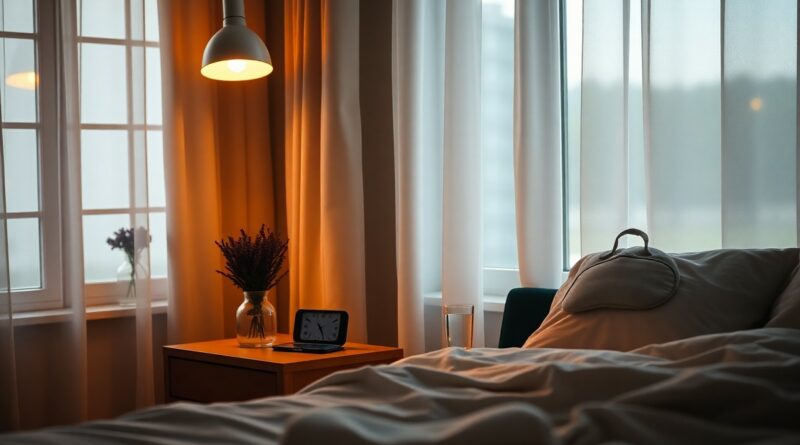
Curtains and eye masks help you reduce glare; use ambient light control like blackout curtains and dim, warm bedside lamps so you fall asleep faster and stay asleep longer.
Controlling ambient light levels
| Action | Benefit |
|---|---|
| Blackout curtains | Blocks street and morning light |
| Eye mask | Portable, immediate darkness |
Managing room temperature and noise
Set your bedroom to 60-67°F and use a white-noise machine or earplugs so you reduce awakenings from sudden sounds and maintain comfortable temperature for deeper sleep.
Managing room temperature and noise
| Setting | Why |
|---|---|
| 60-67°F | Promotes slow-wave sleep |
| White-noise / earplugs | Masks intermittent disturbances |
Maintain 60-67°F and 30-50% humidity; set your smart thermostat and place a white-noise machine at ~50 dB to mask traffic, so you wake up less often.
Temperature & noise tuning
| Measure | Target |
|---|---|
| Temperature | 60-67°F |
| Humidity | 30-50% |
| Noise | ~50 dB white-noise |
Light Exposure Tips
Utilizing light exposure as a key factor in regulating the body’s natural circadian rhythm and sleep-wake cycle, you can nudge your internal clock with brief morning sun and dim evenings. This aligns melatonin timing and eases falling asleep.
- light exposure
- circadian rhythm
- sleep-wake cycle
Increasing natural light in the morning
Open curtains immediately after waking and spend a few minutes outside to reinforce your circadian rhythm, boosting daytime alertness and improving nighttime sleep.
Reducing artificial blue light in the evening
Dim screens and enable blue light filters 1-2 hours before bed so you don’t suppress melatonin and delay sleep onset.
Reduce exposure further by using warm bulbs, wearing orange-tinted glasses, and avoiding close-screen TV time; these steps lower the impact of artificial blue light on your sleep-wake cycle, making it easier for you to fall asleep and maintain deeper rest.
How-to Master Evening Wind-Down Techniques
Implementing simple evening wind-down techniques to transition the body into a restful state before bed. helps you cue sleep: dim lights, stop screens 30-60 minutes before sleep, and pick calm activities like reading or gentle stretches to prepare your body and mind.
Establishing a consistent pre-sleep ritual
Create a short, repeatable ritual you follow nightly-wash your face, lower lights, and avoid screens 30-60 minutes before bed-so your body learns that the routine signals rest and reduces alertness before sleep.
Mindful relaxation and breathing exercises
Try two to five minutes of diaphragmatic breathing or progressive muscle relaxation to lower your heart rate and quiet your mind, making it easier for you to drift into sleep.
Practice diaphragmatic breathing by placing one hand on your chest and one on your belly: inhale through the nose for four counts, hold one, exhale for six counts; repeat for five minutes to slow your breathing, calm your nervous system, and signal readiness for sleep.
Caffeine Timing Factors
Plan your day around caffeine timing: strategic caffeine timing to ensure that stimulant consumption does not disrupt your ability to fall asleep. The best practice is to stop caffeinated drinks about six hours before your usual bedtime.
- You should end caffeine timing by mid-afternoon (2-3pm) to protect sleep onset.
- You should track stimulant sources like coffee, tea, chocolate, and some medications.
- You should avoid late espresso shots or energy drinks that keep you awake and hinder ability to fall asleep.
Setting an early afternoon caffeine cutoff
Set an early afternoon cutoff by stopping caffeine by 2-3pm or at least six hours before your usual bedtime to reduce stimulant carryover and help you fall asleep more quickly.
Identifying hidden stimulants in the diet
Check product labels for caffeine in dark chocolate, matcha, guarana, energy gels, and some OTC pain meds; these hidden stimulants can keep you alert and delay sleep onset.
Investigate ingredient lists and serving sizes: an 8‑oz brewed coffee averages about 95 mg caffeine, black tea 40-70 mg per cup, 1‑oz dark chocolate 12-23 mg, while guarana or mate supplements can add 50-200 mg-these totals affect your caffeine timing and can prevent you from falling asleep if consumed too late.
How-to Integrate Simple Habits
You can integrate small changes into your existing daily routine-practical tips for incorporating these small changes into an existing daily routine without a total overhaul include shifting bedtime by 15 minutes, dimming lights 30 minutes before bed, and consulting 8 secrets to a good night’s sleep – Harvard Health.
Making incremental habit adjustments
Try adding one small change at a time: set an alarm 15 minutes earlier to prep for bed, swap caffeine after 2 pm for herbal tea, and track results for 7 nights-these practical tips for incorporating these small changes into an existing daily routine without a total overhaul reduce sleep disruption.
Maintaining consistency for long-term results
Keep sleep and wake times steady across weekdays and weekends, limit naps to 20 minutes, and review habits every two weeks to sustain progress; applying practical tips for incorporating these small changes into an existing daily routine without a total overhaul delivers lasting benefits.
Commit to tracking sleep for 30 days, logging bedtime, wake time, screen use, and caffeine; adjust one habit every two weeks, set phone reminders, and celebrate small wins so consistency becomes automatic and you improve sleep without overhauling your entire routine.
Conclusion
With this in mind you can improve sleep quality through manageable, natural adjustments and consistent daily habits; Final words: small changes you sustain nightly will yield better rest; consult Best Natural Remedies for Sleep: Science-Backed Tips for evidence-based guidance.
FAQ
Q: How can I improve sleep without overhauling my daily routine?
A: Small, targeted changes often produce the biggest gains. Keep a consistent wake time to set your internal clock, expose yourself to bright morning light for 10-20 minutes to signal daytime, and shift caffeine consumption earlier in the day. Create a short, 20-45 minute evening wind-down that you can fit into existing habits: dim lights, switch devices to night mode, enjoy a warm shower or gentle stretches, and use a relaxing activity like reading or breathing exercises. Optimize the bedroom for sleep with cooler temperature, blackout curtains, and minimal noise. Adjust only one or two elements at a time to see what helps most.
Q: What role does light exposure play in sleep, and how can I use it without changing my schedule?
A: Light is a primary cue for the circadian rhythm. Get natural sunlight within the first hour after waking by stepping outside or sitting near a bright window for 10-20 minutes; that single habit can shift alertness and sleep timing. In the evening, lower indoor lighting and reduce screen time for 30-60 minutes before bed; enable blue-light filters on devices if you must use them. These adjustments fit into mornings and evenings without requiring major schedule changes.
Q: What simple evening wind-down techniques help sleep without a full routine change?
A: Pick two or three calming practices you can do nightly for 20-45 minutes before bed. Examples: dim lights and read a physical book, take a warm shower to relax muscles, practice 5-10 minutes of deep breathing or progressive muscle relaxation, or write a short to-do list to clear your mind. Replace one high-stimulation habit-such as social media scrolling-with one calming habit and keep the rest of your evening the same.
Q: Which bedroom adjustments improve sleep quality without major spending or renovations?
A: Focus on light, temperature, noise, and bedding comfort. Install blackout curtains or use a sleep mask to reduce light, set room temperature between roughly 60-68°F (15-20°C) if possible, and add earplugs or a white noise source for steady background sound. Choose pillows and blankets that suit your comfort and consider a mattress topper before replacing a mattress. Remove bright clocks and, if possible, keep phones out of arm’s reach to lower temptation to check them at night.
Q: How should I manage caffeine, naps, and evening meals to sleep better without big lifestyle shifts?
A: Time caffeine to earlier in the day; stop consuming it at least 6-8 hours before your planned bedtime. Limit naps to 10-30 minutes and avoid napping late in the afternoon. For evening eating, avoid heavy, spicy, or high-sugar meals within two hours of bed; choose a light snack with protein and complex carbs if you are hungry. Moderate alcohol intake and avoid using it as a sleep aid, since it fragments sleep later in the night.
