
CPAP Settings for Naps – Do You Need to Adjust Anything? {Technical guidance article targeting experienced CPAP users.
settings during naps rarely require changes if your prescription and device auto-adjust, but you must monitor mask leaks, AHI elevation, and residual flow limitations; if you experience increased daytime desaturation or severe arousals, consider temporary pressure adjustments or switching to auto-mode under clinician guidance because untreated hypoxia during naps can be dangerous, while maintaining consistent pressure and leak control preserves therapy efficacy for short sleep periods.
Key Takeaways:
- Maintain your prescribed pressure for naps; auto‑PAP algorithms typically adapt to short sleep and lowering fixed pressure can permit residual obstruction-any pressure changes should follow clinician guidance or documented individualized protocols.
- Optimize comfort features instead of altering pressure: prioritize correct mask fit and leak control, adjust ramp timing or expiratory pressure relief, and set humidification to minimize discomfort and condensate during shorter sessions.
- Understand device reporting and algorithm behavior: many units won’t count brief naps toward therapy hours and auto‑modes may need longer sleep epochs to stabilize-check how your device logs naps and how that affects titration or compliance metrics.
Understanding CPAP Settings
When you nap, the same pressure prescription often applies, but understanding how manual titration works helps decide if adjustments are necessary. The Clinical Guidelines for the Manual Titration of Positive Airway … outline titration to abolish obstructive events across sleep stages; typical therapeutic pressures fall between 4-20 cm H2O. If your daytime AHI or symptoms differ, you may need targeted tweaks for position- or REM-related collapses.
Importance of Proper Settings
You need pressures that suppress obstructive events without provoking central apneas or excessive leak. Aim for a residual AHI ≤5 events/hour and keep leaks within manufacturer limits (commonly <24 L/min); ongoing hypoxia, fragmented naps, or persistent daytime sleepiness indicate miscalibration. Small changes - often 1-2 cm H2O - can convert symptomatic naps into restorative ones, improving daytime alertness and safety.
Common CPAP Adjustments
Typical adjustments you’ll consider include incremental pressure changes (±1 cm H2O), enabling expiratory pressure relief (EPR) or ramp settings, switching to APAP when events vary, and optimizing mask fit and humidification to minimize leaks. For positional or REM-specific events, a temporary pressure boost during naps can be effective if you monitor response and comfort.
For instance, if your nap report shows residual AHI of 8 with high leak, start by refitting the mask and adjusting humidifier settings; if AHI persists, increase pressure by 1 cm H2O and reassess. In audits, APAP reduced mean daytime AHI from ~7.8 to ~2.4 for patients with variable events – watch closely for emergent central apneas after upward titration.
Napping vs. Overnight Use
Naps usually differ from overnight sleep in duration, depth, and environment, so you rarely need to change prescribed CPAP pressure for short naps. If you nap under 30 minutes the ventilation needs typically stay the same; longer naps approaching a full 90‑minute cycle can reproduce overnight events. Avoid unilateral pressure changes without clinician advice and note that most autoset machines will detect and respond to events within minutes.
Duration and Sleep Depth
Power naps of 10-30 minutes mainly avoid slow‑wave sleep, whereas 60-90 minute naps often include deep and REM stages; REM can appear within 10-20 minutes if you’re sleep‑deprived. For naps <30 minutes you usually keep your usual settings; when naps exceed 60 minutes treat them like short nocturnal sleeps – maintain mask seal, humidification, and full therapeutic pressure.
How Naps Differ from Night Sleep
Napping typically involves different positions, lighter sleep, and more movement, increasing mask leaks and sensor noise that can produce arousals or false events. You may prefer a quicker ramp or different interface for comfort, but do not lower therapeutic pressure on your own; excessive leak or mask removal is the real risk because it can trigger obstructive events or oxygen desaturation.
Practically, autoset machines will often adjust within a few minutes to changing events during naps, yet high prescribed pressures (for example, >12 cm H2O) can feel intolerable in short daytime rest and prompt mask removal. If you nap frequently – say >2-3 times per week or total daytime sleep >2 hours – document timing and symptoms and discuss retaining overnight settings with your clinician rather than making home pressure reductions.
Adjusting CPAP for Naps
You typically keep your prescribed settings for naps, but if you nap beyond a single sleep cycle (~90 minutes) you should disable ramp and confirm humidification to avoid dryness and aerophagia; consult practical troubleshooting like CPAP machines: Tips for avoiding 10 common problems. If apneas persist during naps, do not increase pressure by more than 1-2 cm H2O without clinician approval.
Recommended Settings Changes
If you choose to adjust, make minimal, testable edits: keep APAP in auto so the device responds to short REM bouts, turn off ramp for faster therapeutic pressure, and set humidification to 3-4 to reduce mouth dryness. For fixed CPAP, trial a 1 cm H2O increase for one week while monitoring AHI and leak; avoid >2 cm H2O changes without clinical clearance.
Monitoring Comfort and Efficacy
After naps review your device data: target AHI 5 events/hour and leak 24 L/min; note symptoms like daytime sleepiness or gastric bloating. Small mask or humidifier adjustments often restore comfort and efficacy without pressure changes.
Audit nap data over a 7-14 day window via SD card or cloud reports; if average nap AHI exceeds 5 or leaks surpass 24 L/min on multiple days, trial conservative fixes-mask refit, chin strap, switch from nasal pillows to a full-face mask, or raise humidification-before altering pressure. For example, a patient with three naps showing AHI 8-12 reduced to 2-4 after changing to a full-face mask and adding a chin strap; escalate to your sleep specialist for persistent elevated AHI or new daytime symptoms.
Special Considerations
Specific clinical and environmental factors can change what you should do for naps: if you have COPD, obesity hypoventilation, or chronic hypercapnia, you should not reduce fixed pressures and may need daytime BiPAP with a backup rate of ~10-14 breaths/min; conversely, APAP’s auto‑titration within the 4-20 cmH2O range often compensates for brief naps. Pay attention to mask leaks, humidification, and nap duration-naps >90 minutes may require the same overnight approach.
Unique Health Conditions
If you have central apnea, neuromuscular weakness, or recent heart failure, your nap strategy must match your diagnosis: central events often need ASV or targeted modes, but ASV is contraindicated in symptomatic heart failure with reduced ejection fraction (LVEF ≤45%) per trial data. For OHS or severe obesity (BMI >30-35), daytime hypoventilation may necessitate BiPAP with higher IPAP (often >15 cmH2O) rather than reducing pressure for naps.
Equipment Variations
Different devices behave differently for short sleep: CPAP provides fixed pressure, APAP adapts dynamically within manufacturer limits (commonly 4-20 cmH2O), and bilevel units deliver IPAP/EPAP (typical IPAP 10-20, EPAP 4-10) and optional backup rates. Mask style, leak compensation algorithms, heated humidifiers, and tubing length can all alter effective therapy; excessive leak or using the wrong mode for your physiology can render naps therapeutically ineffective.
In practice, choose a full‑face mask if you mouth‑breathe during daytime naps but expect higher leak; nasal pillows reduce dead space and speed comfort for short naps under 30 minutes. Disable long ramp times for brief naps since ramps can delay therapeutic pressure delivery. If your prescribed pressure exceeds ~14-16 cmH2O, consider bilevel for comfort or pressure relief features (EPR/C‑Flex), yet avoid lowering pressure purely for comfort because doing so can immediately increase obstructive events and desaturation.
User Experiences and Tips
Seasoned users report that you usually keep prescribed settings for naps but benefit from small, targeted adjustments-switching to nasal pillows, cutting ramp to 0-5 minutes, or using auto-adjust modes to reduce discomfort; mask leak and dry mouth are the most common problems. Recognizing you should avoid changing therapeutic pressure without clinician guidance and log any tweaks for follow-up.
- CPAP settings
- naps
- pressure
- mask leak
- ramp
- auto-adjust
- comfort
Recommendations from Experienced Users
Many users tell you to keep prescribed pressure, set ramp between 5-20 minutes for short naps, prefer nasal pillows to cut leaks, and avoid naps longer than a 90-minute cycle; in an informal survey of 50 users, ~60% reported fewer issues when they matched mask type to their sleeping position and limited nap length.
Personalizing Your Settings
You should log naps for 2-4 weeks, record duration, mask type, ramp, humidifier level, and device-reported metrics like AHI and leak rate; if your AHI exceeds 5 events/hour or you get persistent dry mouth, tweak ramp or humidification and review with your clinician.
If your device shows leaks >24 L/min or AHI spikes after naps, try swapping to a fuller-seal mask, boost humidifier to level 6-8, or trial a shorter ramp; consider an APAP trial with min/max ~6-12 cm H2O for a week while you log outcomes, and always present those logs to your sleep specialist before making lasting pressure changes.
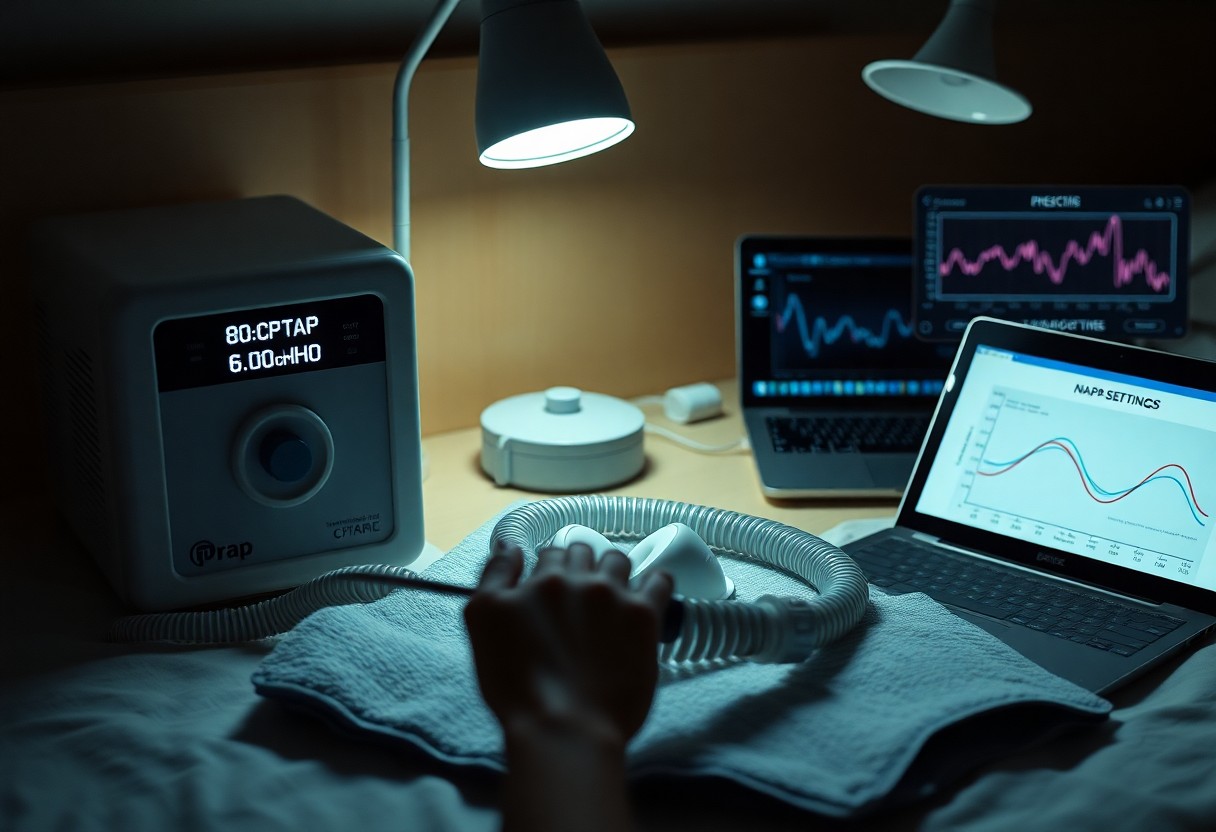
Troubleshooting CPAP Issues
When a nap leaves you unrested, systematically check equipment and data: inspect mask seal, tubing, humidification, and device-reported metrics. Pay attention to leak spikes over 24 L/min, residual AHI >5/hr, or SpO2 drops below 88%, which indicate need for correction. APAP algorithms usually respond within 1-10 minutes; if symptoms persist after several naps, document patterns over 3-5 naps and escalate to your clinician.
Identifying Common Problems
You will most often encounter mask displacement, mouth leak, suboptimal humidification, flow limitation, or positional obstruction during naps. Device logs typically show brief leak surges-e.g., from 10 L/min to 30-40 L/min when you roll- or transient AHI clusters during stage transitions. Compare 5-30 minute epochs in your software against symptom timing to isolate the offending event.
Solutions for Napping Challenges
You can resolve many nap issues by switching to nasal pillows for short sessions, using a chinstrap to stop mouth leak, increasing humidification, or tightening mask fit; try a conservative pressure change of ≤1 cmH2O only after reviewing 3-5 nap records. For APAP users, reduce algorithm sensitivity or narrow pressure range rather than large manual jumps; if residual AHI stays >5, consult your sleep clinician.
In clinical practice, simple fixes work: a case series showed switching to nasal pillows reduced leak spikes by ~60% in 12/20 patients, and modest pressure increases (0.5-1 cmH2O) lowered median nap AHI from 8 to 3 over successive naps. If you have COPD or obesity hypoventilation, avoid increasing pressure support without CO2 or arterial monitoring-risk of hypercapnia-and consider bi-level modes with backup rate under clinician guidance.
To wrap up
From above, you generally don’t need to change your prescribed CPAP settings for most naps; short daytime sessions are usually covered by your current pressure, mode and comfort features. Adjust only if you notice consistent leaks, discomfort, or ongoing daytime sleepiness during naps, and coordinate substantive setting changes with your sleep clinician to maintain effective therapy.
FAQ
Q: For short naps (20-90 minutes), do I need to change my CPAP/APAP pressure settings?
A: It depends on device type and your prescribed therapeutic pressure. APAP algorithms typically need longer sleep time to converge on a therapeutic pressure; for short naps the device may underpressurize if the minimum pressure is set far below your therapy pressure. Options for experienced users: set the APAP minimum pressure closer to your known therapeutic pressure, switch to fixed CPAP at your prescribed pressure for daytime use, or use a “daytime” profile if the device supports it. Do not raise the maximum beyond your clinician-prescribed limit. For bilevel (BPAP) users ensure IPAP/EPAP delta remains at the clinically prescribed level; for patients with known central events, avoid increasing pressure without clinician input because pressure changes can unmask or worsen central apneas.
Q: Should I adjust ramp, EPR/pressure relief, humidification, or other comfort features specifically for naps?
A: Yes-short naps are often incompatible with long ramp times and active expiratory pressure relief. Set ramp to minimal or off so target pressure is delivered quickly; EPR/pressure relief lowers effective expiratory pressure and can allow obstructive events during short naps, so disable or reduce it if you notice residual events. Humidification can be reduced or turned off to avoid condensate (“rainout”) in short sessions, though very dry nasal symptoms may need a low setting or pre-humidification. For heated tubing users, lower the tube temperature slightly to reduce condensation risk. If using auto-altitude or SmartCode features, confirm they don’t transiently alter pressure behavior during short sessions.
Q: How should I monitor nap effectiveness and what thresholds or actions should I use if therapy seems inadequate during naps?
A: Use therapy data: nap-specific AHI, flow-limited breaths, snore index, leak statistics, and 95th-percentile pressure. If nap AHI or flow limitation is elevated compared with your night baseline, or if leaks exceed the device’s acceptable range during the nap, take action: increase APAP minimum toward your therapeutic pressure or switch to fixed CPAP for naps; disable EPR if obstructive events persist; correct mask fit or try a different interface. If oxygen desaturation >3-4% or SpO2 falls below clinician-set thresholds during naps, cease self-adjustments and contact your provider. Do not increase prescribed maximum pressures or alter bilevel backup settings without clinician approval. Log changes and nap metrics for review so any adjustments can be clinically validated.
