
How to Create the Perfect Nap Environment-Starting With Your Breathing
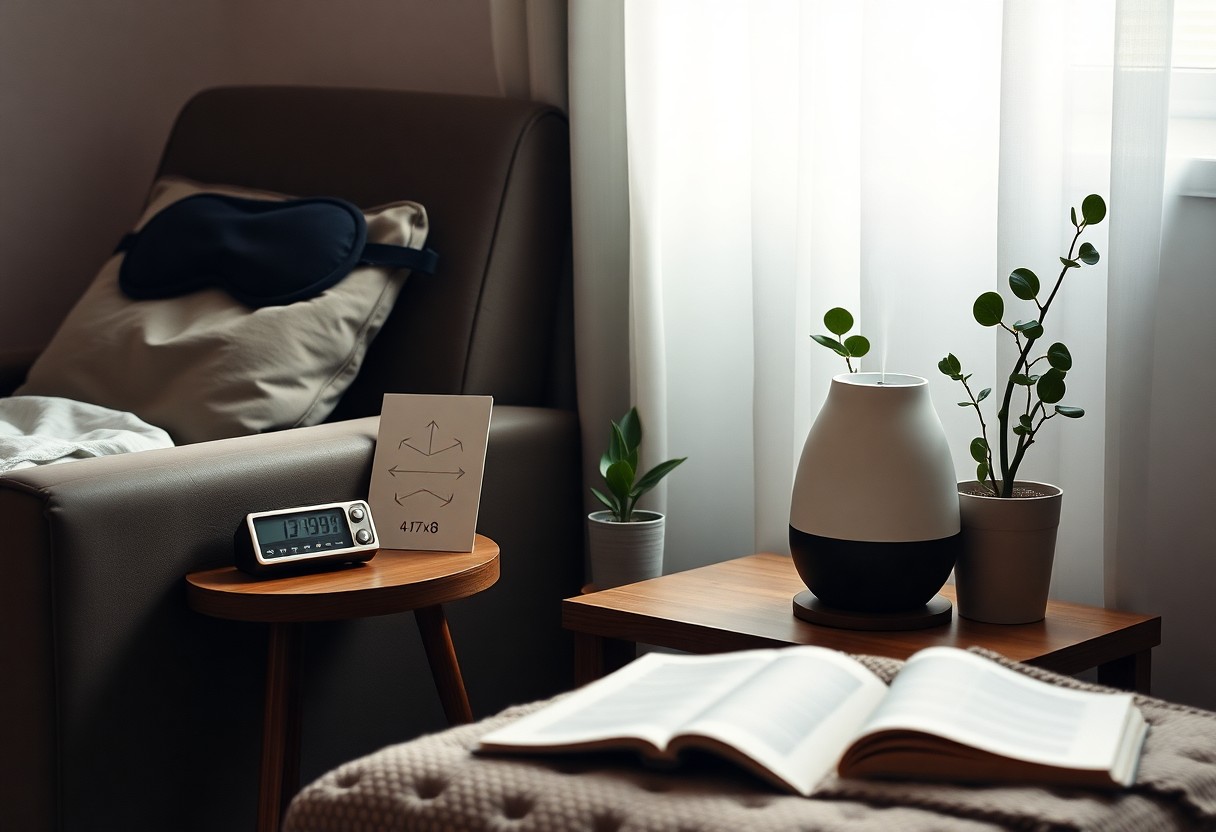
Breathing sets the tone: align your room temperature, darkness and sound to support steady nasal breathing, use gentle routines and consider nasal strips to boost airflow; monitor your position and timing for optimal rest. If you experience choking, gasping or loud snoring, treat it as a potential medical concern and consult a professional. These steps help you build a safe, restorative nap environment centered on your breath.
Key Takeaways:
- Optimize breathing by focusing on slow nasal inhales and longer exhales (for example, 4-6 seconds in, 6-8 seconds out) to lower heart rate and ease into sleep; nasal strips help keep nasal airflow steady and reduce mouth breathing.
- Create a nap-friendly environment-dim light, cool temperature, minimal noise, and a comfortable position-to amplify the calming effects of nasal breathing and shorten sleep onset.
- Use adhesive nasal strips as a simple, noninvasive support when congestion or narrow passages limit nasal breathing; apply them correctly before lying down and pair with a brief breathing routine for best results.

Start with your breathing: a how-to foundation
You begin napping better by prioritizing nasal breathing: it warms, humidifies, and delivers nitric oxide that aids oxygen uptake and calming. Practice quiet, diaphragmatic breaths for 60-90 seconds before lying down; nasal strips can open the valve if you feel resistance. Keep breaths slow and gentle-about 5-6 breaths per minute-to increase heart-rate variability and signal sleep readiness. Consistent nasal breathing supports smoother sleep onset and less fragmented naps.
How-to assess nasal vs. mouth breathing and correct common issues
For a quick assessment, sit quietly for one minute and note where airflow feels strongest; use a mirror to check for nasal fogging on gentle exhales and record one night with a phone to spot mouth-breathing episodes. If you detect obstruction, try a saline rinse, apply a trial nasal strip, and use chin support to encourage nasal flow; avoid adhesive lip seals if you have severe congestion or breathing disorders. Knowing a short mirror test plus a one-night strip trial often reveals whether structural or habit causes dominate.
- nasal breathing
- mouth breathing
- nasal strip
- saline rinse
- chin support
Tips: simple breathwork to lower arousal and trigger nap readiness
Start with 1-2 minutes of diaphragmatic breaths (inhale 4s, exhale 6s) to drop sympathetic tone, then do 4 cycles of the 4-7-8 pattern (inhale 4s, hold 7s, exhale 8s) or 5-10 minutes of coherent breathing at ~6 breaths/minute (5s in, 5s out) to boost vagal tone and HRV. Keep the mouth closed so nasal breathing amplifies effects; a nasal strip can help if airflow is limited. Knowing to finish with a longer exhale through the nose deepens relaxation.
- diaphragmatic breathing
- 4-7-8
- coherent breathing (6 bpm)
- nasal breathing
- nasal strip
Try a compact protocol: 2 minutes diaphragmatic breathing, 4 cycles of 4-7-8, then 5 minutes of coherent breathing at 6 breaths/min; this sequence typically lowers cortisol drivers quickly and is practical before a 20-30 minute nap. If nasal resistance reduces the calming effect, add a trial nasal strip or a saline rinse first, and keep sessions to 10-12 minutes to avoid sleep inertia. Knowing that addressing nasal flow first preserves the breathwork’s benefits improves nap consistency.
- breathwork protocol
- sleep inertia
- nasal strip
- saline rinse
- HRV
Improve nasal airflow and supportive aids
How-to choose and apply nasal strips, saline, and decongestant strategies
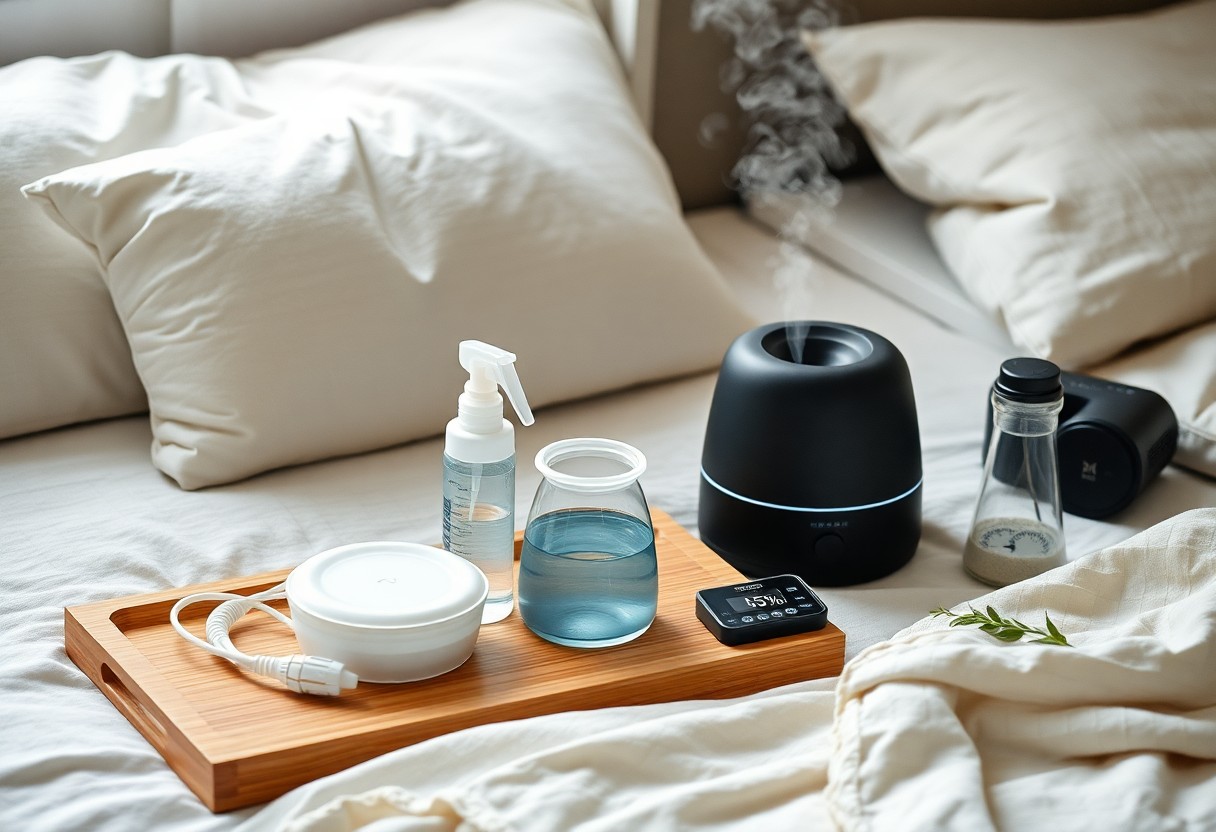
You should try an adhesive nasal strip 10-15 minutes before a nap-choose the correct size, place across the bridge, and press for 10 seconds to optimize lift; pair with isotonic saline spray (1-2 sprays per nostril) to clear mucus, and consider a saline gel if your air is dry. Limit topical decongestant sprays to 3 days to avoid rebound congestion like rhinitis medicamentosa. Recognizing when symptoms persist or worsen helps you avoid prolonged rebound effects.
- Nasal strips: test fit 10-15 minutes before nap
- Saline: 1-2 sprays per nostril, gel at night if dry
- Decongestant: max 3 days to prevent rebound
- Timing: apply strip just before settling down
- Application: press firmly for secure adhesion
Factors: allergies, chronic congestion, humidification, and when to see a clinician
You should address allergies first-oral antihistamines or intranasal steroids can reduce symptoms by roughly 30-60%; if congestion lasts over 3 months or you have frequent nosebleeds, consider ENT evaluation for polyps or a deviated septum. Keep bedroom humidity at 40-60% to prevent mucosal drying and improve airflow. Recognizing persistent obstruction, loud nightly gasping, or blood warrants clinical assessment.
- Allergies: antihistamines or intranasal steroids
- Chronic congestion: >3 months → consider ENT
- Humidification: aim 40-60% RH
- When to see a clinician: persistent obstruction, bleeding, or loud gasping
You should pursue targeted evaluation if standard measures fail: allergy testing and subcutaneous or sublingual immunotherapy can lower symptom burden long-term, and intranasal corticosteroids often outperform antihistamines for nasal obstruction (improvements commonly cited in the 40-60% range). For structural issues, a CT scan and ENT consultation can identify polyps or a deviated septum; short courses of oral steroids or surgical correction may be recommended. Recognizing red flags such as nightly choking, daytime sleepiness, or recurrent epistaxis prompts expedited clinical workup.
- Allergy testing: consider if seasonal or perennial triggers suspected
- Immunotherapy: for long-term reduction in allergic symptoms
- Imaging/ENT: CT or referral for suspected polyps or septal deviation
- Surgical options: septoplasty or polypectomy when conservative care fails
- Red flags: choking, daytime sleepiness, recurrent nosebleeds
Control light, sound, and scent for quick sleep
How-to set blackout, eye coverings, and targeted soundscapes
You can block visual cues with full-panel blackout curtains or a contoured eye mask that seals around your nose bridge, then pair with targeted soundscapes-pink or white noise and nature tracks-to mask disruptions at ~45-55 dB; avoid sustained levels above 85 dB to protect hearing. Use a speaker placed 1-2 feet from your head for even delivery, and apply a nasal strip to reduce nasal resistance so breathing stays steady as you drop into sleep.
Quick blackout & sound settings
| Blackout method | Full-panel curtains or adhesive window film for >95% light reduction |
| Eye covering | Contoured mask that avoids pressure on eyelids |
| Soundscape | Pink/white noise at 45-55 dB; nature sounds for cisternized naps |
| Nasal strips | Apply before lie-down to improve airflow and reduce micro-awakenings |
- blackout – aim for >90% light reduction
- eye mask – choose breathable, contoured fabrics
- soundscapes – loop 20-40 minutes of consistent audio
- Any nasal strips worn correctly will support unobstructed breathing
Tips: ideal temperature, scent use, and minimizing disturbances
Set your nap zone to about 60-67°F (15-19°C) to speed onset and deepen rest, diffuse lavender at 1-3 drops or use a 10-15 minute diffuser burst-avoid strong fragrances if you have allergies-and silence phones with Do Not Disturb plus apps off; if others share space, schedule a 20-30 minute quiet window. Combine these with a nasal strip so improved nasal airflow matches the calming environment.
Temperature, scent & disturbance controls
| Temperature | 60-67°F; use fan or AC to stabilize within ±1°F |
| Scent | Lavender 1-3 drops or low diffuser setting; stop if irritation occurs |
| Minimizing disturbances | Phone DND, mute notifications, inform housemates of short nap window |
| Nasal strips | Support airway openness, especially if mouth-breathing disrupts naps |
You can automate comfort: program a 30-minute pre-nap thermostat setback of 1-2°F, set a diffuser timer for 10-15 minutes to avoid oversaturation, and start a 20-30 minute soundscape loop; if roommates are predictable, synchronize nap windows to reduce interruptions. Test adhesive placement for a nasal strip once so it sticks reliably; if you have sensitive skin, remove after short trials and monitor. Any persistent congestion should prompt alternative strategies rather than forcing longer wear.
- temperature – program small setbacks for consistency
- scent – diffuse briefly; avoid overuse
- nasal strips – test placement 5-10 minutes before nap to ensure comfort
- Any disturbances that persist? Use earplugs or negotiate a short quiet period
Practical adjustments
| Action | Quick setup |
| Thermostat | Set to 60-67°F; enable short pre-nap cooling |
| Diffuser | 10-15 minute run at low output with lavender |
| Noise | Speaker 1-2 ft away, 45-55 dB loop |
| Nasal strip | Apply 1-2 minutes before lying down for best seal |
Optimize surface, posture, and comfort
You want a surface that supports neutral spine alignment-choose a medium-firm mattress, recliner, or padded bench and add a thin knee pillow if you’re lying flat; pair that with a nasal strip to keep nasal airflow steady and short breathing cues, and combine it with the breathing trigger in How to Fall Asleep Fast in 10, 60, or 120 Seconds to fall asleep faster and wake less groggy.
How-to pick pillows, positions, and support for short naps
For a quick 10-20 minute nap, favor a low-to-medium loft pillow that keeps your head aligned; side-nappers need a firmer, higher pillow than back-nappers, and a small cervical roll prevents neck flexion-use a thin lumbar support or folded towel for recline setups, and add a nasal strip to reduce mouth breathing and stabilize your breath.
- Pillow loft: aim for 4-6 cm on your back, 6-10 cm on your side.
- Position: 20-30° recline reduces neck strain and supports nasal breathing.
- Any nasal strip: helps keep airways open so short naps stay restorative.
Tips: preventing stiffness, reducing sleep inertia, and micro-rest setup
You can prevent stiffness by doing 30-60 seconds of dynamic stretches before lying down, set an alarm for 10-20 minutes to avoid deep-sleep inertia (or 90 minutes for a full cycle), and assemble a micro-rest kit-eye mask, small pillow, timer, and a nasal strip-so you can nap anywhere with consistent breathing and minimal post-nap grogginess.
- Movement prep: 30s neck and shoulder rolls loosen tissues before a nap.
- Alarm timing: 10-20 minutes boosts alertness; 90 minutes completes one REM/non-REM cycle.
- Any micro-rest kit: pillow, eye mask, timer, and nasal strip for fast setup.
In practice, a 15-20 minute nap reliably improves alertness and reaction time-studies show short naps reduce subjective sleepiness and enhance cognitive performance-so you should plan your posture and supports accordingly: low head elevation for back naps, higher loft for side naps, brief pre-nap mobility, and a nasal strip to minimize nasal resistance; post-nap, spend 2-5 minutes moving and exposing yourself to bright light to clear residual grogginess.
- Hydration: 100-150 ml water before or after helps reduce morning stiffness.
- Cooling: a room 1-2°C cooler speeds recovery and reduces inertia.
- Any post-nap routine: 2-5 minutes of light movement and bright light to restore alertness.
Timing, duration, and routines that work
How-to schedule nap timing and ideal nap lengths for goals
Aim for naps during the early-afternoon dip (about 1-3 pm) or roughly 6-8 hours after you wake. For a quick alertness boost, keep naps to 10-20 minutes; for improved procedural memory, try ~60 minutes; for full-cycle restoration choose ~90 minutes. If you wake at 7 am, a 1-3 pm slot fits most goals; nasal strips can help maintain airflow and reduce micro-awakenings. This lets you pick a length that matches your immediate goal and limits sleep inertia.
- 1-3 pm
- 10-20 minutes
- 60 minutes
- 90 minutes
- nasal strips
Factors: circadian timing, prior sleep debt, caffeine, and consistency
Circadian low points typically fall between 1-3 pm, so align naps there when possible. If you have accumulated sleep debt from several nights under 7 hours, your nap pressure will be higher and longer naps may be more restorative. Avoid caffeine within roughly a 5-hour window before a planned nap to prevent failed sleep onset. Maintain a consistent nap time on workdays to entrain your rhythm; nasal strips can support breathing when you’re congested. This helps prevent late-evening insomnia and preserves nighttime sleep quality.
- circadian timing
- sleep debt
- caffeine (5-hour half-life)
- consistency
- nasal strips
If you’ve logged under 6-7 hours of sleep across recent nights, expect stronger nap drive and consider a longer nap (up to 90 minutes) to recover slow-wave sleep; otherwise a 20-minute power nap avoids inertia. Track caffeine timing: because caffeine has a ~5-hour half-life, drinking coffee after mid-morning can interfere with a 1-3 pm nap. Try napping at roughly the same time 3-4 days a week to stabilize the habit; nasal strips can make consistent naps easier when congestion flares. This reduces unpredictable sleepiness and improves daytime performance.
- under 6-7 hours
- 20-minute nap
- 90-minute nap
- 5-hour half-life
- consistency
Final Words
The best nap environment starts with your breathing: practice slow, nasal inhalation and consider nasal strips as a supporting aid to keep your airways open while you optimize light, temperature, and posture; this holistic approach ensures you get restorative rest. Use resources like NAP HACKS | nap tips to refine your routine and personalize what helps you nap best.
FAQ
Q: How does breathing influence nap quality and which breathing method should I use?
A: Breathing determines oxygen delivery, heart-rate recovery, and parasympathetic activation-all key for falling into a deep, restorative nap. Begin with slow nasal diaphragmatic breathing: sit or lie comfortably, place one hand on the chest and one on the belly, inhale through the nose for 4 counts so the belly rises, pause 1-2 counts, then exhale slowly for 6-8 counts. Repeat for 5-10 minutes before lying down. Nasal strips can help by gently widening the nasal passages so nasal breathing is easier and less effortful, which supports fuller, slower breaths and reduces mouth breathing that fragments rest.
Q: What physical nap environment best supports breath-focused napping?
A: Create a cool, dim, quiet space with moderate humidity (40-60%) to keep nasal passages comfortable. Elevate your head slightly to reduce congestion and encourage nasal drainage; use a supportive pillow that keeps the chin relaxed to avoid airway tension. Minimize strong scents and bright screens for 20-30 minutes before the nap. Add white noise or soft nature sounds to stabilize breathing rhythm. If you wake congested or breathing through your mouth, apply a nasal strip to improve airflow; pair with a saline nasal rinse or humidifier when needed.
Q: How do I choose and use nasal strips safely as part of my nap routine?
A: Select strips sized for your nose and labeled for all-day or sleep use; choose hypoallergenic adhesive if you have sensitive skin. Clean and dry the bridge of the nose before application, press the strip across the widest part of the nostrils, and smooth the edges for secure adhesion. Apply the strip 5-10 minutes before practice so breathing normalizes, and remove gently after waking. Avoid applying to irritated or broken skin, and do not use strips as a substitute for medical evaluation if you have chronic congestion, recurring breathing pauses, or diagnosed sleep-disordered breathing; consult a clinician for those issues. Replace strips if adhesive fails or after a single use per manufacturer instructions.
