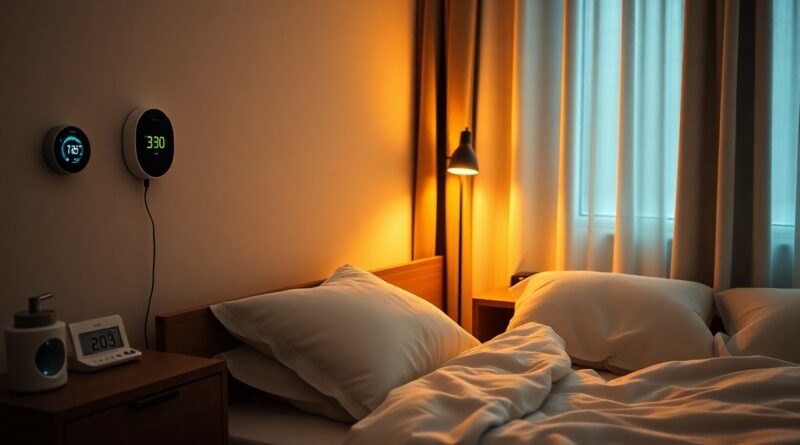
The Best Temperature, Lighting, and Noise Levels for Quality Sleep
Just follow sleep science: Sleep science indicates that specific environmental conditions are imperative to help the body relax and prepare for rest. You should set 60-67°F, use dim, warm lighting, and maintain near-silent noise; see Recommendations for daytime, evening, and nighttime indoor …
Key Takeaways:
- Bedroom temperature between 60-67°F (15-19°C) supports faster sleep onset and deeper slow-wave sleep by helping the body’s core temperature drop.
- Cool, breathable bedding and moisture-wicking sleepwear assist heat loss and reduce nighttime awakenings.
- Dim, warm-colored lighting for 1-2 hours before bed reduces blue-light exposure, allowing melatonin levels to rise and easing the transition to sleep.
- During sleep, keep light levels near darkness (under ~1 lux); blackout curtains, eye masks, and covering LEDs preserve melatonin and improve continuity.
- Aim for steady low nighttime noise-below about 30 dB when possible; if masking is needed, use continuous white/pink noise at a low, even volume to smooth sudden spikes that trigger arousals.
Finding the Ideal Sleep Temperature
Research suggests that a cool environment is a critical environmental condition that helps the body relax and initiate the transition into deep sleep stages. You should keep your bedroom slightly cool to support that physiological shift.
Temperature Summary
| Aspect | Detail |
|---|---|
| Environmental claim | Cool environment aids relaxation and deep sleep stages |
| Action for you | Maintain a slightly cool bedroom |
Impact of Thermal Regulation on Sleep Quality
Thermal regulation affects how quickly you enter deep sleep; a cool environment helps lower your core temperature, signaling the shift into deep sleep stages and improving sleep continuity.
Thermal Impact
| Mechanism | Effect on you |
|---|---|
| Core temperature drop | Speeds sleep onset |
| Stable coolness | Reduces night awakenings |
Ideal Room Temperature Ranges for Rest
Aim for 60-67°F (15-19°C) for most adults; this range supports your body’s cooling and the transition into deep sleep stages.
Recommended Ranges
| Group | Temperature |
|---|---|
| Most adults | 60-67°F (15-19°C) |
| Variations | Adjust bedding if you feel cold or hot |
Consider infants and older adults may require 68-72°F (20-22°C), while lighter sleepers can use 60-67°F; adjust bedding and clothing so the cool environment still triggers your body to relax and initiate the transition into deep sleep stages.
Practical Adjustments
| Situation | Tip for you |
|---|---|
| Infants/elderly | Keep room ~68-72°F (20-22°C) |
| Heavier bedding | Use lower room temp within recommended range |
Mastering Light Levels for Melatonin Production
Controlling light exposure is a fundamental environmental factor that helps you stay asleep longer by regulating the circadian rhythm.
Minimizing Blue Light and Artificial Glow
Limit evening exposure to blue light and artificial glow by using warm bulbs, dimmers, or night-shift apps; these steps help you produce melatonin and align your circadian rhythm so you stay asleep longer.
The Benefits of Total Darkness for Sleep Continuity
Darkness reduces awakenings by eliminating light cues; creating total darkness with blackout curtains or an eye mask helps you maintain melatonin levels and sleep continuity.
Complete elimination of ambient light cuts microarousals and extends deep sleep: when you seal gaps, install blackout curtains, or wear an eye mask you increase melatonin production and reinforce your circadian rhythm. Controlling light exposure is a fundamental environmental factor that helps you stay asleep longer, so aim for no ambient light in the bedroom.
Optimizing the Acoustic Environment
Noise matters: Managing noise levels and introducing soothing sounds are key factors that help the body stay asleep longer and prevent mid-night awakenings. Use Best Lighting For Sleep: Best Night Light Temperatures to balance light and sound for better rest.
Utilizing White Noise for Sound Masking
White-noise machines mask disruptive sounds so you stay asleep; Managing noise levels and introducing soothing sounds are key factors that help the body stay asleep longer and prevent mid-night awakenings.
Reducing Disruptive Environmental Decibels
Lowering ambient decibels reduces wake-ups; Managing noise levels and introducing soothing sounds are key factors that help the body stay asleep longer and prevent mid-night awakenings, so aim for bedroom levels below 40 dB.
Measure bedroom sound with a smartphone app and keep steady background under 40 dB with spikes below 55 dB. You can seal gaps, install double glazing, add thick curtains, rugs, or acoustic foam to cut exterior noise by 5-15 dB. Managing noise levels and introducing soothing sounds are key factors that help the body stay asleep longer and prevent mid-night awakenings.
Designing a Comprehensive Sleep Sanctuary
Combining temperature, light, and sound controls creates a synergistic effect that allows the body to wake up feeling more refreshed. You should align thermostat, blackout shades, and white-noise to support deeper, more consistent sleep.
Integration of Environmental Factors
Balance your temperature, lighting, and noise settings so each reduces arousal and cues sleep. Assume that combining temperature, light, and sound controls creates a synergistic effect that allows the body to wake up feeling more refreshed.
- Temperature
- Lighting
- Noise
Promoting Sustained Sleep Cycles and Body Relaxation
Optimize cool sleeping temperatures, dimmed lights, and gentle masking sounds so you remain in restorative stages longer and reduce night wakings.
Calming your environment synchronizes sleep signals: a modest pre-sleep drop in core body temperature, reduced blue light exposure, and steady sound masking lower micro-arousals and extend deep sleep. You should lower the thermostat slightly, use warm, dim lighting 30-60 minutes before bed, and choose continuous background sound rather than intermittent noises to preserve cycle continuity.
Conclusion
Following this, optimizing your sleep environment through science-backed temperature, lighting, and noise adjustments ensures you stay asleep longer and wake up feeling more refreshed; set bedroom temperature near 18°C, dim lights after 9:00 PM, and use low-level white noise under 40 dB to improve sleep.
FAQ
Q: What is the ideal bedroom temperature for quality sleep?
A: Recommended bedroom temperature for most adults is 60-67°F (15.6-19.4°C). Lower core body temperature supports faster sleep onset and deeper slow-wave sleep, while temperatures above this range increase awakenings and reduce sleep efficiency. Children, older adults, pregnant people, and those with certain medical conditions may need slightly warmer settings; adjust bedding and sleepwear to maintain a comfortable microclimate. Aim for steady temperature through the night or use a programmable thermostat to allow a modest drop during the first half of sleep.
Q: How dark should the bedroom be and what lighting choices help sleep?
A: Bedroom should be as dark as possible for optimal melatonin production; ambient illumination under 10 lux is a useful target for sleep time. Block external light with blackout curtains or an eye mask and remove bright indicators from alarm clocks and electronics. Use warm-colored (amber or red-tinted) low-intensity lights in the hour or two before bed and avoid screens or use blue-light filters during that period to reduce melatonin suppression. Get bright natural light exposure during morning hours to strengthen circadian timing and improve night sleep.
Q: What noise levels support uninterrupted sleep and how should noise be managed?
A: Continuous background noise levels below about 30-35 dB are associated with fewer sleep disturbances; sudden noises above 45 dB are more likely to trigger awakenings. Reduce noise by sealing windows, adding rugs or acoustic panels, and using double-glazed windows where possible. If unavoidable sounds persist, consider low-level steady sound masking (white, pink or brown noise), a fan, or comfortable earplugs to smooth acoustic interruptions and improve sleep continuity.
Q: How do temperature, light, and noise interact to affect sleep quality?
A: The three environmental factors interact to influence sleep architecture and arousal thresholds. Bright light at night suppresses melatonin and can delay the preferred temperature nadir, making the body less ready to sleep; warm room temperatures counteract the natural need for nocturnal cooling and increase wakefulness; intermittent noise raises arousal frequency and fragments deep sleep. Controlling all three simultaneously-cooling the room, eliminating or masking light, and minimizing sudden sounds-produces the largest practical gains in sleep consolidation.
Q: What practical, science-backed steps can I take tonight to improve my sleep environment?
A: Lower bedroom thermostat to the 60-67°F (15.6-19.4°C) range or use breathable bedding and layers to fine-tune microclimate. Dim lights and switch to warm-colored lamps at least 60-90 minutes before bed and avoid screens or enable blue-light reduction during that window. Install blackout curtains or use an eye mask, and reduce noise with weather stripping, rugs, or a sound machine or earplugs if needed. Maintain indoor humidity around 40-60% for comfort, expose yourself to bright morning light to anchor circadian rhythm, and experiment with one environmental change at a time to find the optimal combination for your individual needs.
